
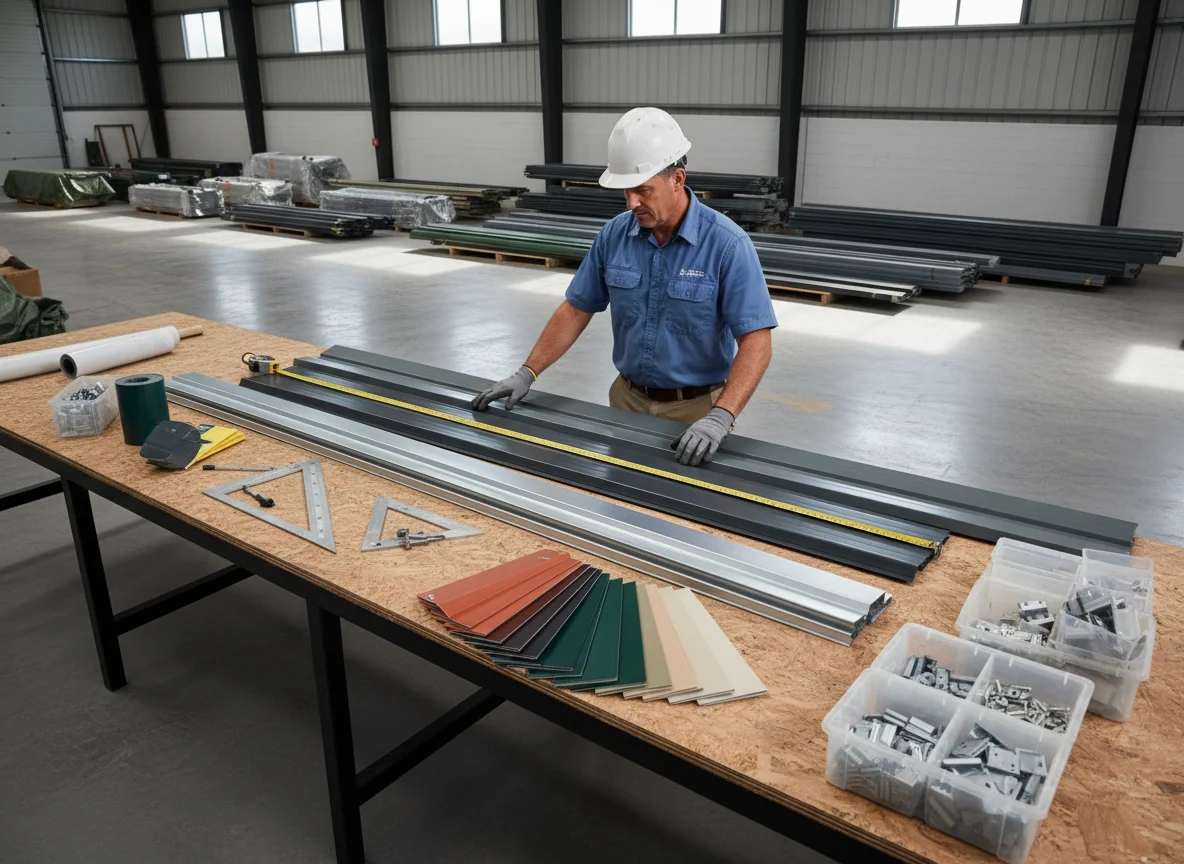
Use this checklist before a roof-sheet request leaves the project team. The order should name the sheets, separate the accessories, show the current revision and make colour or finish choices visible. If a reader has to search emails for the profile, a marked-up photo for the colour and an old drawing for the quantities, the order is not ready.
The checklist is deliberately trade-focused. It does not ask the supplier to design the roof, choose the profile or settle compliance matters. It keeps metal sheets for roof areas, related flashings, colour selections and handover details in separate, readable blocks.
Block 1: Package Name and Drawing Reference
Tick this block first:
- project name or purchase reference included
- roof area named in the same language as the drawings
- current drawing revision shown
- old schedules removed from the file set
- one contact person nominated for clarifications
Roof Areas in the Package
A roof package may cover a main roof, patio roof, carport, awning, shed, commercial elevation or several staged areas. Do not rely on one total quantity if the sheets belong to different zones. North roof, rear patio and lower awning are plain labels, but they help a supplier read the schedule without guessing.
The package should also say whether the request covers only roofing sheets or a wider materials order. Wesroof’s steel roofing and building materials page covers custom-length and profiled roofing and cladding sheets, tophats, battens, stormwater components, purlins and patio components. That range is useful only when each item is named separately.
Block 2: Sheet Profile, Length and Quantity
This is the core sheet block. Include:
- profile selected by the project team
- material nominated for the sheets
- finish or colour family
- sheet lengths as supplied in the schedule
- quantities grouped by roof area
- any left or right versions if the schedule uses them
- whether sheets are roofing, cladding or another nominated use
Keep the Profile Name Exact
Do not replace the profile name with a description such as corrugated-looking, wide pan or close to the existing roof. Stainless steel pressings may sit beside a named stainless run. If the project team has not selected the profile, mark the block as incomplete. A supplier can discuss a nominated supply request, but it should not be asked to choose the product family from vague wording.
Keep design calculations out of this block. Metal cladding can sit beside a related wall face. Pitch, drainage, support layout and fixing requirements should have been resolved through the project documents and relevant product information. The supply checklist can record that the checks are complete, or that the order is waiting for them, but it should not turn an unresolved check into a supply assumption.
A useful short line is: profile selected, lengths scheduled, quantities grouped, design checks handled by project team. If any part of that line is false, pause the order.
Block 3: Colour and Finish Selections
Colour belongs near the top of the checklist, not in a final email note. Confirm:
- exact colour name from the project selection
- finish family if relevant
- whether the same colour applies to every roof area
- whether gutters, fascia, downpipes, trims or cladding must match
- whether any colour is provisional
The COLORBOND colour source lists core colours, a Matt finish range and application filters including roofing, guttering, fascia and walling. That makes it useful for preparing a colour schedule. It does not prove availability through a particular order or suitability for every profile, so the checklist should use nominated project selections rather than assumptions.
For colorbond roof sheets colours, avoid near matches. Dark grey, cream and charcoal are not enough when a colour schedule exists. Write the exact selected name and finish family, then repeat it in the sheet schedule if several zones are involved.
Visible Faces on Folded Pieces
Visible face notes matter for folded metal. Wesroof keeps those notes with the fabrication enquiry. Roof sheets may be clear from the product selection, but ridge cappings, valley components and trims need their own colour-side instructions where the drawing requires them.
Block 4: Flashings, Cappings and Custom Pressings
Separate the sheet order from the metal pieces that frame it. Check whether the package includes:
- ridge cappings
- barge pieces
- aprons
- valley components
- wall flashings
- gutter-related pieces
- trims and edge components
- special folded parts shown on the drawings
Wesroof’s custom metal flashings and construction pressings service covers bespoke flashings, gutters, downpipes and specialised trims from site-specific measurements and architectural drawings. When these items are part of the same roof package, give each one a tag, location and drawing reference.
Keep Pressings on Their Own Lines
Do not hide custom pressings inside a sheet quantity line. Aluminium pressings may sit in the same pack when the project names that material. A ridge capping belongs to a roof line. An apron belongs to a wall or penetration junction. A valley component belongs to a valley run. The supplier should be able to see which drawing supports each item and which material or finish is nominated.
If a pressing is still under revision, mark it as pending. Do not send a roof-sheet order that depends on a folded component still being redrawn unless the request clearly says what is ready and what is not.
Block 5: Compatibility Notes without Overclaiming
This block should be factual and short. Record materials nominated by the responsible parties, especially when steel roofing sits in the same package as aluminium, stainless steel, zinc-coated products, prefinished steel or other metals.
Record the material and compatibility decisions already made by the project team. Do not ask the supplier to certify the whole roof system. About Us covers the fabrication and supply scope.
Use a compact note such as:
- project documents nominate the listed materials
- compatibility checks sit with the responsible project parties
- any mixed-metal condition has its own drawing or specification note
- unknown materials are marked to be confirmed
This protects the order from false certainty. It also keeps the checklist readable.
Block 6: Accessories and Roof-Adjacent Materials
Many orders include more than sheets and flashings. Review whether the schedule includes battens, tophats, purlins, stormwater components or patio components. If so, split them into their own groups.
A scannable schedule might use these headings:
- roof sheets
- related custom pressings
- stormwater pieces if included
- battens or tophats if included
- purlins if included
- patio or awning components if included
Each group should carry quantity, material, finish and reference information where relevant. Do not let a general materials request become a mixed pile of parts. The point of the checklist is to make the order easier to quote, discuss and prepare.
Block 7: Logistics and Handover Information
Supply information is not only technical. Add practical handover details:
- delivery or collection preference
- address or collection contact
- grouping required by stage or roof area
- access notes provided by the project team
- contact person for order questions
- any packaging or bundle separation request
The live homepage describes fabrication, supply and delivery as part of the business context. Light fabrication may apply if several prepared parts become one supplied item. The Wesroof home page also describes long-standing custom steel and sheeting solutions in Western Australia. Keep logistics as a practical order field, not a promise about stock, timing or delivery reach.
Group Bundles by Stage
Grouping can save confusion on site or at collection. If the main roof sheets, patio sheets and custom flashings are needed at different stages, say so. If collection is preferred, name who will collect and how the groups should be labelled in the schedule.
Keep logistics separate from design notes. A bundle group might say main roof sheets plus ridge pieces, while another says rear patio sheets plus matching barge components. Those labels do not decide how the roof is built. They simply tell the supplier how the nominated materials should be discussed and grouped for handover. They also help the project team check whether accessories have followed the correct roof zone.
Block 8: Final File-Set Review
Before the order is sent, open the file set in the order a supplier will read it. The email or enquiry note should say what is being requested. The schedule should list the sheet groups. The drawings should support the schedule. Pressings should have their own tags. Colour and finish notes should match across documents.
Common File-Set Contradictions
Look for common contradictions:
- one profile in the email and another on the plan
- one colour in the schedule and another beside the drawings
- old quantities left in an attachment
- missing length columns
- flashings drawn but not listed
- visible face notes missing from folded items
- provisional design checks written as if they are complete
If the checklist finds a contradiction, fix the document set before sending it. A short delay at this stage is usually better than a follow-up chain after the order has been opened.
One last read should be done with the attachments closed. Ask whether the schedule alone tells the reader what is included, what is separate and what is still provisional. If it does not, add a short cover note rather than relying on file names. The note can say which roof areas are included, which folded parts are attached and which selections have been confirmed by the project team.
Keep Wesroof’s Supply Note to One Line
The scope note only needs one line: we can discuss fabrication and materials supply from nominated sheets, schedules and drawings. Design, approval and site fitting stay with the project team. The FAQ covers how we take an enquiry and what we do not install.
That line should sit near the end because the checklist has already organised the order. The reader now knows which fields are about supply and which fields belong to the project team.
Separate These Items in Your Schedule before Sending
Your final schedule should have distinct lines for sheets, flashings, cappings, trims, stormwater pieces, battens, tophats, purlins and any patio components included in the request. Keep metal sheets for roof areas in their own group, then list related folded parts underneath with drawing references.
After the checklist is complete, Contact us to send the current schedule, drawings, colour and finish notes.

Leave A Comment