
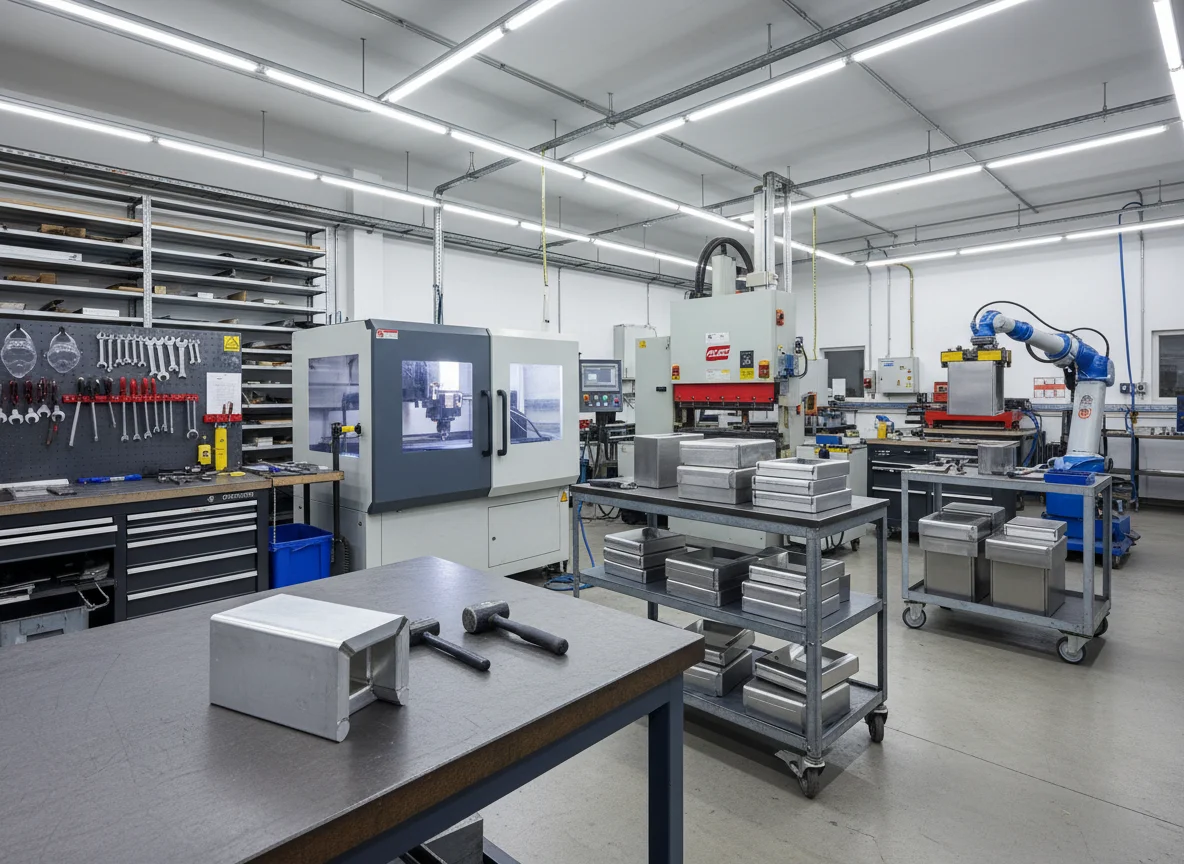
The repeat run starts with the first sample, not with the final quantity. A rough prototype might show whether the shape is understandable. A corrected sample might show which changes have been accepted. Only after that can a small batch be treated as repeat work rather than a set of similar one-offs.
Picture the run as three physical stages on the same bench: first sample, reviewed revision and grouped repeat parts. Each stage needs a different question. What did the first piece need to prove? What changed after review? Which version is accepted? What information should the workshop use when the next items are made?
First Sample: Give It One Job
A prototype is useful when it answers a named question. Aluminium pressings may sit in the same pack when the project names that material. It might need to show how a guard sits around equipment, how an enclosure opens, how a splashback return meets an adjacent surface or how a small fabricated part looks once bends, joins and finish are brought together. If the first piece has no defined job, the finished sample may look encouraging without proving whether the batch can proceed.
Write that job in plain language. Stainless steel pressings may sit beside a named stainless run. State whether the first piece is a visual sample, a dimensional trial, a fabrication method check or the first item in a planned run. Those are different instructions. A visual sample may focus on finish face and proportions. A dimensional trial may need critical clearances supplied by the project. A fabrication method check may focus on joins, returned edges and access for welding or finishing.
The phrase prototype sheet metal fabrication should describe a controlled first build, not an open design exercise. The project still needs its own design decisions, use checks and approvals where they are relevant. The fabrication brief should tell the workshop what to make and what the sample is expected to demonstrate.
Component Route: Parts before Assembly
Before the first piece is made, separate shaped parts from assembled work. Steel roofing and building materials may sit in the same pack when sheets are listed. Wesroof’s light fabrication scope covers taking pressed, cut or supplied metal components and turning them into finished, ready-to-use assemblies, using cutting, TIG or MIG welding and finishing techniques for small-to-medium work. For a sample that may become a run, light fabrication is most useful when the brief shows both the individual parts and the assembled result.
That distinction prevents a vague custom item from hiding too much. A cabinet body may begin as pressed sheet. A lid may need a formed return. A guard may include perforated or solid sheet metal. A small architectural frame may involve joined sections rather than one folded length. If those pieces are not separated in the file, the workshop has to interpret the route before the fabrication discussion can start.
A practical first-sample pack contains an overall view, individual part views where they matter, join locations, finish notes and the planned quantity if the first piece is accepted. It should also identify items outside the metalwork conversation. Electrical parts, site fixings, equipment mounting and building approval decisions should remain with the relevant project party.
Review Bench: Record What Changed
The review stage is where many small runs become unstable. Metal cladding can sit beside a related wall face. A first piece is handled, compared with the sketch, marked up and discussed. Someone may ask for a moved cut-out, a changed corner, a different return, a cleaner access opening or a revised finish face. Those changes are useful only if they are captured in the current file.
Write the Review Note
Use a short review note rather than relying on memory. Record what changed from the first sketch, which edge or face became critical, whether any cut-outs or joins moved, which material and finish assumptions were used, and whether the next run should follow the physical sample or the updated drawing. Wesroof keeps that with the fabrication enquiry.
That last point controls the batch. Steel roofing and building materials may sit in the same pack when sheets are listed. If the sample and drawing differ, the repeat order must not leave the workshop guessing which version wins. A simple note saying that the sample supersedes the old sketch, or that the drawing has been updated to match the sample, keeps the accepted revision visible.
Custom metal parts fabrication needs this discipline because a part that is easy to make once can become difficult to repeat if tolerances, finish direction or assembly order are left informal. The aim is not to burden a small job with unnecessary paperwork. It is to make sure the second item is based on the same information as the approved first item.
Accepted Revision: Name the Controlling Version
Once the review changes are settled, give the accepted version a reference. The FAQ covers how we take an enquiry and what we do not install. That may be a drawing issue, a sample label, a dated sketch or a short revision note. The format can be simple, but the controlling version has to be clear before a small batch is priced or discussed as repeat work.
Four Questions for the Accepted Version
The accepted revision should answer four practical questions. What is the object? Which drawing or sample controls it? Which material and finish have been nominated? What quantity is being considered for the next run? Add any supplied parts, openings, removable faces, visible edges or grouped components that affect the fabrication conversation.
Do not hide acceptance in an email thread. If the accepted sample had a changed corner, a different return or a revised material, put that note into the current drawing pack. If the batch will be collected or delivered with other materials, keep that logistics note separate from fabrication requirements. The workshop can then read the metalwork first and the handover context second.
A short acceptance note is especially useful when the part interacts with equipment, building fabric or another trade’s work. Name the envelope or connection requirement that has been supplied by the project, but do not ask the fabricator to make the design or approval decision. The accepted revision should show the difference between fabrication instructions and unresolved project inputs.
Pressing Route: Repeat Value in the Profile
Some prototypes are not assemblies. They are first versions of a pressed profile, trim, flashing, guard face, cover or formed plate. Wesroof’s custom pressing capability includes bespoke flashings, gutters, downpipes, trims and specialised construction profiles, made from drawings and site-specific measurements supplied by the project. When the repeat value sits in the bend sequence, a custom metal pressing route may be the better second stage.
For those jobs, the sample has to prove the profile. Custom metal flashings and construction pressings may sit in the same pack when folded pieces are listed. Fold direction, visible face, end treatment, handed versions and material choice matter more than assembly sequence. A small batch of linear pieces can become confusing if one return is reversed or a colour face is on the wrong side. A clear profile drawing and accepted sample reference are stronger than a broad label such as trim, cover or bracket.
A prototype pressing can also show that the item is no longer just a simple formed length. If the accepted version needs welded corners, joined sub-parts, a removable face or a finished enclosure body, the batch plan may move back towards light fabrication. Treat that discovery as useful review evidence, not as a failed sample.
Batch File: Turn Acceptance into Repeat Instructions
The batch file should read in the order a workshop will use it. About Us covers the fabrication and supply scope. Start with the part name, accepted revision, quantity, material preference and finish notes. Add the current drawing or sketch. Then list supplied parts, joined elements, cut-outs, openings, important faces and any photographs of the accepted prototype. Label photographs as reference images and state whether the drawing or physical sample controls the next run.
Material language should stay cautious. Wesroof’s public pages refer to Colorbond Steel, Zincalume, galvanised steel, stainless steel, aluminium and mild steel across different product groups. That is useful for an enquiry, but it is not a universal claim that every material suits every prototype, forming route, finish or project environment. Material selection belongs in the brief as an input, not as an automatic performance promise.
Mark Finish Direction Before Repeat
Finish direction also belongs in the batch file. If a visible face, colour side, brushed face, grain direction or outer surface matters, mark it before repeat work is discussed. Do the same for edges that will be handled after supply, removable covers, lidded faces and corners that remain visible. Small fabricated items are often viewed close up, so each repeated piece needs the same practical appearance notes.
Scope Checkpoint after Acceptance
The repeat-run handover to Wesroof should point to the accepted revision, explain what the first piece proved and identify exactly what must be repeated.
Keep the supply and fabrication request separate from unsupported project decisions. If the part relies on an equipment layout, building detail, user clearance, external approval or another trade’s component, include the resulting requirement in the file without asking the fabricator to resolve that dependency. The fabrication conversation should stay with the described metal item and its supplied information.
Final Check before Repeat Parts
Check the run in sequence. Has the first sample’s purpose been named? Are review changes captured? Is the accepted revision clear?
If those answers are in the file, the enquiry can be direct. Attach the current sketch, drawing or reference images, explain what the prototype proved and state the intended small-batch quantity. That gives the fabrication conversation a practical starting point: one accepted metal part, a controlled revision and repeat instructions that do not ask the workshop to guess at decisions the project has not made. Contact us to check the current fabrication scope.

Leave A Comment