
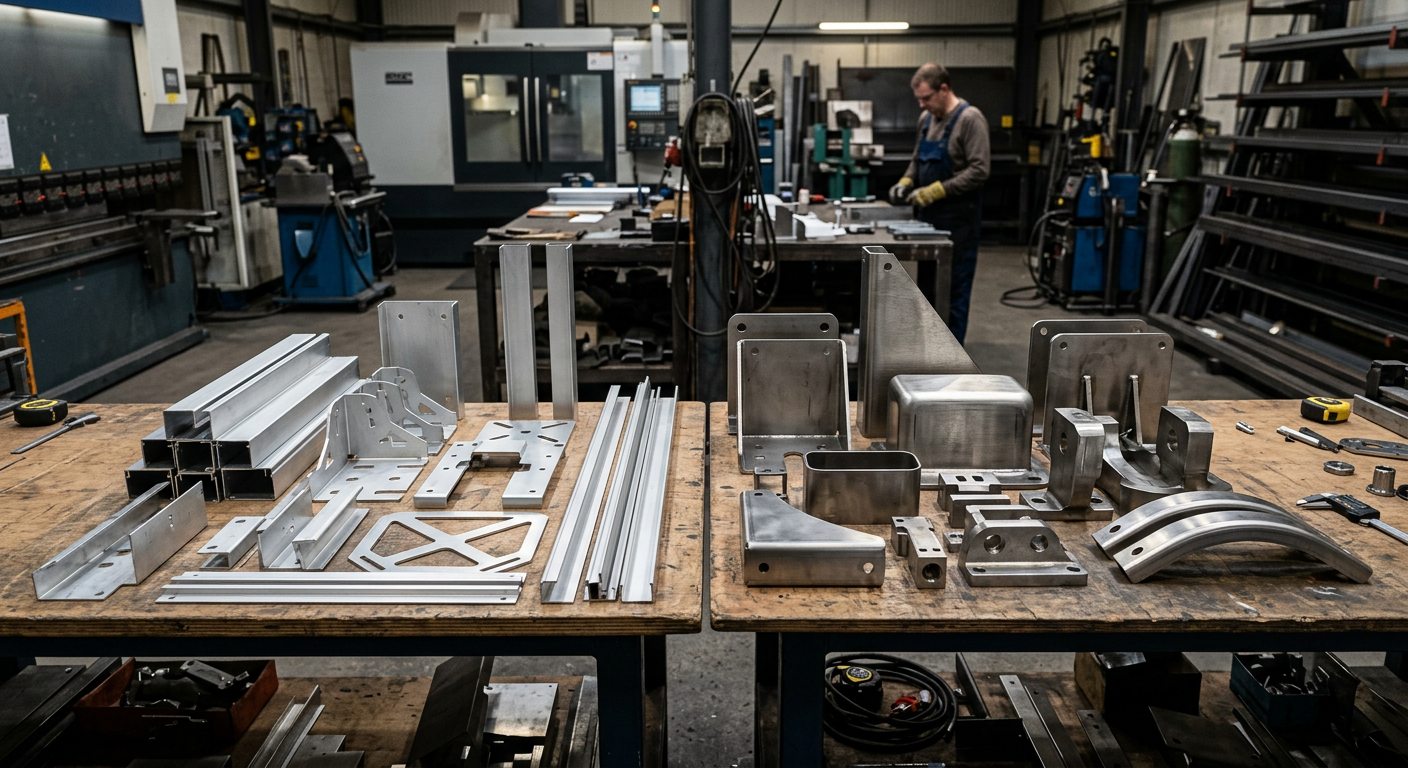
Aluminium fabrication and stainless steel fabrication suit different commercial component briefs, so the useful choice starts with the item rather than a blanket material verdict. Define the pressing, its location, geometry, interfaces, quantity and finish requirements before asking a fabricator to price either option.
A folded window trim, food-handling pressing, façade detail, gutter and wear slide do not create the same fabrication conversation. Even where two parts look similar on a drawing, their surrounding work, exposed faces and connection details may differ. The comparison therefore needs to stay attached to the component that will actually be made.
Commercial builders and contractors can make that comparison clearer by issuing the same drawing set and component schedule for both materials. Known dimensions should be separated from open details, and each revision should have an identifier. That gives the fabricator a stable basis for discussing aluminium, stainless steel or another nominated sheet material.
This approach does not ask the fabricator to decide matters that belong with the designer, engineer or builder. It turns a broad material question into a buildable fabrication brief while keeping approvals and installation decisions with the appropriate trade and project contacts.
Start With the Component, Not the Material Label
“Aluminium” and “stainless steel” are material descriptions, not complete instructions. Neither word establishes the profile, bends, returns, overall length, visible faces, junctions, penetrations or drawing revision. A request that stops at the material name leaves too much of the component undefined.
Name the item in ordinary construction language first. It may be a flashing, pressing, cladding panel, sheet, tophat, batten, gutter, downpipe, trim or enclosure. This gives every person reviewing the enquiry the same point of reference and prevents a broad material preference from obscuring the actual scope.
The component’s job should then be described without promising an outcome that the drawing has not resolved. State where it sits, what it adjoins and which dimensions govern its form. If an architect, engineer or contractor must confirm a junction, identify that open point instead of filling the gap with an assumption.
Map Each Part to Its Use
A component schedule is useful when a package contains repeated parts. Give each distinct profile a code, then connect that code to its drawing, quantity and location. Window pressings, façade pressings and roof sheets may all be aluminium items, but they still need separate identifiers when their shapes or interfaces differ.
Keep Application Language Separate
Application language helps route the enquiry without becoming a substitute for design information. A stainless food-handling pressing, gutter or mining wear slide describes a category of work. It does not establish dimensions, grade, finish or approval requirements. Those details must come from the current project information.
Put the Available Information in One Comparable Brief
Start with the current drawing or sketch, revision identifier, component code, known dimensions and quantity. Add the contact responsible for confirming changes. If a return, opening or interface remains unresolved, mark it as open so that no one treats a tentative detail as approved.
For packages involving flashings, gutters, downpipes, specialised trims, coolroom trims or transportable building pressings, the published custom pressings range provides useful trade nouns for organising the schedule. Colorbond, Zincalume, galvanised steel, aluminium and stainless steel are among the materials named for this work, but the project brief should still nominate what applies to each component.
Keep Drawings and Schedules Aligned
Use the same component codes in the drawing set, quantity schedule and request for quotation. When a revision changes one profile but leaves another unchanged, record that difference. A fabricator can then respond against specific items rather than interpreting a general note across the whole package.
Record Variants Instead of Hiding Them
A group of similar pressings may include different widths, corner conditions or return dimensions. List those variants separately. This is especially useful when procurement needs to compare two material options, because both responses can be checked against the same item count and current geometry.
Describe Shape and Interfaces in Practical Terms
For architectural aluminium work, identify whether the enquiry concerns window pressings, façade pressings or pressed roof sheets. These are published aluminium pressings categories, and each directs attention to different component details. A window trim may rely on a jamb or sill drawing, while a façade pressing may need references to adjoining panels and visible joint lines.
Mark folds, returns, corners, openings, penetrations and transitions on the drawing. Identify which faces remain visible and which will be concealed. If the component meets another material or trade package, include the relevant detail reference and the person authorised to resolve any discrepancy.
A commercial enquiry can also cover sheeting, cladding, tophats and battens alongside fabricated pressings. Wesroof fabricates sheet-metal components in Maddington and delivers orders. That supply role should be reflected in the brief: the builder or contractor provides the information needed for fabrication and coordinates the component with the people carrying out the site work.
Compare Like With Like
When aluminium and stainless steel are both under consideration, keep the component geometry constant unless the design specifically calls for a change. If one option is based on a different drawing or quantity, the responses are not directly comparable. Record any material-specific changes as separate, authorised revisions.
Keep Stainless Scope Specific
Stainless work published for discussion includes food-handling pressings, gutters and mining wear slides. Use those categories carefully and provide the real component details. The stainless pressings range also names 304 and 316, but a commercial enquiry should only nominate a grade when it is already required by the project documents or has been confirmed by the responsible specifier.
Make Quantities and Repeatability Explicit
Quantity changes the fabrication conversation. One custom part, a prototype, a small set and a recurring run should not be described in the same vague way. State the number of each coded item and whether all pieces use the same drawing revision.
Some briefs extend beyond individual pressings into cut, welded or assembled items. Published light fabrication work includes machine guards, stainless steel splashbacks, architectural frames, planter boxes, small non-structural handrail systems, enclosures and housings. If an assembly is required, show which parts are supplied, which parts need fabrication and what the finished item includes.
Repeatability should be recorded rather than assumed. Note whether a part is a one-off, a sample for review or one member of a larger set. If later quantities remain uncertain, separate the confirmed order from possible future demand. This keeps the quotation attached to the defined scope.
Separate Appearance Decisions From Unresolved Details
Appearance information belongs in the brief when it has a clear source. Record any nominated colour, texture, orientation, visible face or sample reference from the project finish schedule. Do not turn a preference into a fabrication instruction until the person responsible for the finish has confirmed it.
A broader building package may also call for custom-length or profiled sheets, stormwater components, tophats or battens. The published steel materials range names sheets, tophats, battens, stormwater pieces and other construction components. Keep each item tied to its drawing and nominated material rather than treating the range as one interchangeable order.
Use Profile Names Precisely
Cladding 280 is a specific named profile, not a general label for metal cladding. Where the drawing calls for that 280 profile, link the schedule to the Cladding 280 reference and state whether the project documents nominate Colorbond or Zincalume. For another profile, use its actual designation instead of borrowing the 280 name.
Keep Finish and Form as Separate Checks
The form check asks whether the profile, dimensions, bends and openings match the current drawing. The finish check asks whether the nominated visible treatment and orientation have been recorded correctly. Reviewing them separately reduces the chance that an approved colour is mistaken for approval of an unresolved shape.
Ask for Information That Makes Proposals Comparable
A useful request asks the fabricator to respond against the supplied component list, quantities and drawing revisions. It should also invite clarification where information is missing. That produces a more useful comparison than asking only for a price against a broad aluminium or stainless description.
The published fabrication FAQ makes the supply boundary clear: turnkey refers to fabrication and delivery. We installation is outside this supply, although we can refer trades. Site measurements, roof assessments, fitting, repairs, maintenance and re-roofing therefore need to remain with the builder, contractor or other appropriately engaged trade.
Define What the Quote Covers
Ask the response to identify the components understood, quantities allowed for and drawing revisions reviewed. Where a detail is unclear, the fabricator can flag it for confirmation before fabrication. This makes exclusions and open questions visible without assigning design authority to the supplier.
Give Context Without Writing the Answer
A short description of the project and component location can help interpret a drawing. Our fabrication history spans work with stainless steel, aluminium, Colorbond and galvanised materials, including one-off flashings and production runs. The enquiry still needs to define the particular pressing, sheet or assembly required now.
Keep Responsibility Lines Visible
Nominate one enquiry contact who can issue current drawings and coordinate replies. Identify the architect, engineer, builder or contractor responsible for confirming each open point. When a detail changes, issue the revised information to the same recipients instead of relying on an informal site conversation.
We fabricate and deliver the agreed order. We do not fit roofing, carry out onsite roof assessments or take responsibility for installation workmanship. The contractor handling the flashing, pressing, cladding or sheeting package should check site conditions, coordinate interfaces and confirm that the fabrication information is current before the order proceeds.
This distinction is particularly important where aluminium pressings sit beside glazing or façade work, or stainless components connect to equipment, drainage or another fabricated assembly. The supplier needs accurate geometry and quantities. The project’s appointed people retain responsibility for design decisions, site coordination and installation.
Turn the Comparison Into a Focused Next Conversation
Choose between aluminium fabrication and stainless steel fabrication by defining the component first, then comparing responses against the same drawings, quantities, interfaces and open decisions. Send the current brief to the contractor who holds the sheet-metal order, confirm the supply boundary and Speak with us about fabrication and delivery.

Leave A Comment