
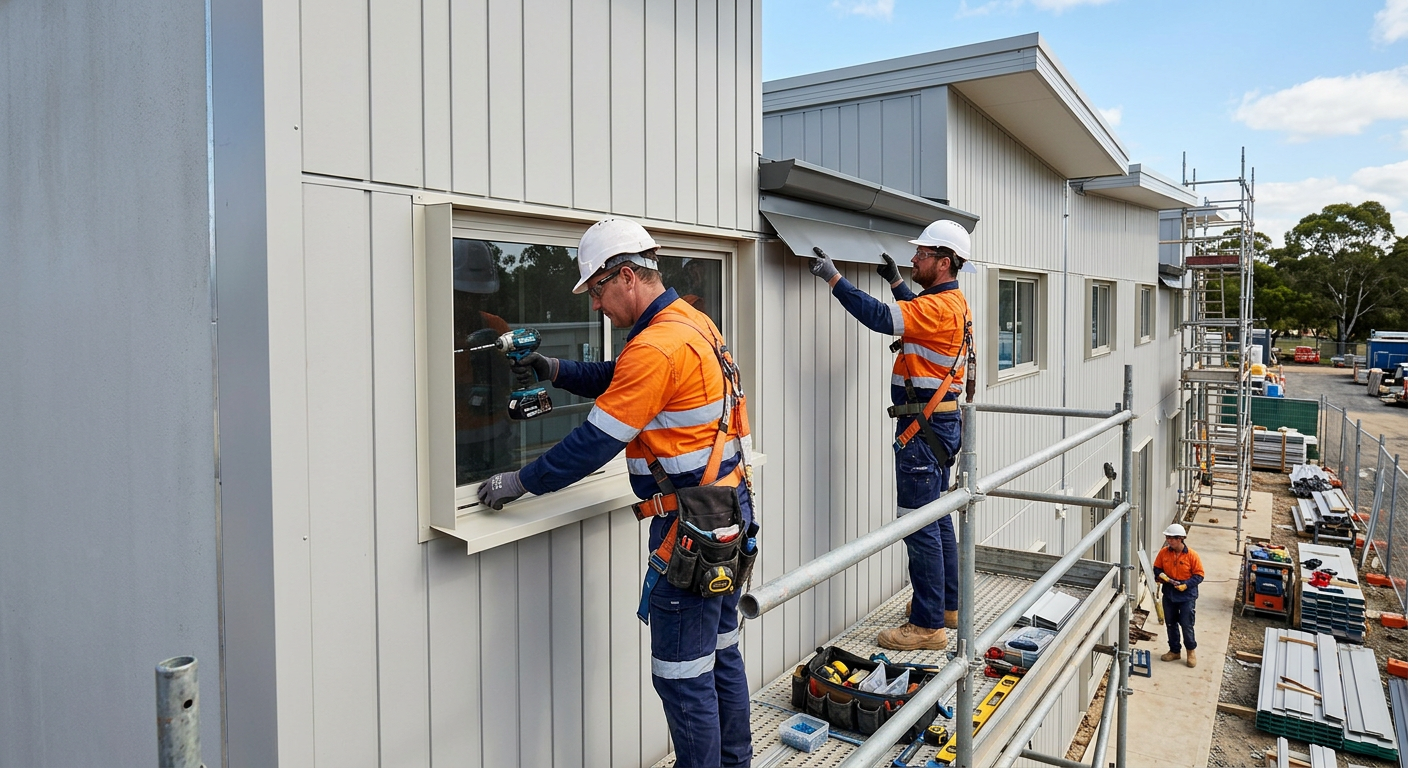
Precision metal pressings can reduce installation time for modular buildings when components match clear drawings, locations and repeatable profiles. The benefit starts before fabrication: each flashing, pressing or trim is identified, dimensions are resolved and genuine repeats are kept consistent.
Modular construction depends on coordination. A small ambiguity can be repeated across several modules. The practical task is to identify what repeats, what changes and which current document controls each item, rather than assuming every similar module is identical.
A pressing schedule can connect drawings, procurement, fabrication and delivery. The builder or contractor can see where each component belongs, while the fabricator receives organised information instead of conflicting sketches, photographs and informal descriptions.
Installation remains the work of the builder or appointed trade. The fabricator turns confirmed order details into the requested metal components and delivers them. That boundary keeps site questions with the responsible people and the fabrication enquiry focused on profiles, materials, quantities and delivery requirements.
Map Each Pressing To A Repeatable Module Location
A generic name such as folded trim is rarely enough for a modular project. The record should identify the module, elevation, opening, roof or wall junction, and the drawing detail where the item appears. If the project already uses module numbers or zone codes, retain that language in the order instead of creating a second naming system.
The location reference matters because components that look similar may serve different junctions. A corner flashing, head flashing, sill pressing and capping can all be folded from sheet metal, but their dimensions and orientation are not interchangeable. Connecting each item to a specific location helps the builder review the right detail before it reaches fabrication.
Repeated modules should be grouped only after the current documents have been compared. If ten modules use the same confirmed profile, that relationship can be recorded. If two modules carry different openings or revisions, they should remain separate line items. This prevents apparent repetition from concealing a change that the contractor needs to manage.
Build An Identity Card From Supplied Information
Record The Component And Source
Each pressing needs a compact identity card. Useful fields include the item name, module location, drawing and detail reference, revision, material named in the documents, quantity, dimensions and any fold orientation shown. The card should also identify the source file so a reviewer can return to the exact information rather than rely on memory.
Preserve supplied dimensions and labels as they appear. If a dimension, quantity or material is missing, mark it for clarification rather than copying a value from another module. Precision starts with knowing which details are confirmed and which are still open. A tidy schedule cannot compensate for an unresolved profile.
Separate Material From Profile
Material and profile answer different questions. Colorbond, Zincalume, galvanised steel, aluminium, stainless steel and mild steel describe material choices published across the fabrication range. A flashing, tophat, batten, capping or cladding profile describes the form. Both need to be identified where the order requires them, without treating one as a substitute for the other.
Finish, visible face and fold direction also need clear notation where they matter to the supplied drawing. The person preparing the order should check these details with the responsible builder, contractor or document owner. The fabricator should not be expected to infer a project selection from a photograph or a familiar trade name.
Keep Quantity Tied To Location
A total quantity is useful only when the items behind it are traceable. Record the number required at each module or junction, then reconcile the total. This gives procurement a practical check and makes it easier to isolate a later drawing change without reopening every line in the order.
Use Drawings As Fabrication References
Current drawings provide the clearest starting point for construction pressings, including flashings, gutters, downpipes, specialised trims, coolroom trims and transportable building pressings. The enquiry should point to the relevant detail and include the confirmed dimensions needed for fabrication. Where the drawing is unclear, the builder or document owner should resolve the question before the order is released.
Different materials can require separate order lines even when the location is similar. The published range of aluminium pressings includes components for window and door systems, facades and pressed roof sheets. If aluminium is named for a modular detail, record it directly and keep that component distinct from steel sheeting or trim elsewhere in the package.
The same discipline applies to stainless pressings. Stainless steel is available for fabricated components, including published gutter and mining wear applications, but the project documents still need to identify what the modular order requires. Do not carry aluminium window-pressing descriptions into a stainless item simply because both are formed from sheet.
Separate Repeated Parts From Repeated Wording
Modular projects benefit from standardisation, but repeated wording is not proof of an identical part. Wesroof fabricates and delivers custom steel and sheeting solutions. Once a builder or contractor supplies a confirmed common profile, we can treat the genuine repeat as an organised fabrication run rather than a collection of unrelated descriptions.
Supporting items should remain visible in that order structure. Our steel building materials range includes sheeting, tophats, battens and stormwater components. Naming the specific trade item helps distinguish a structural support section from external sheeting or a folded flashing, even when several components arrive for the same module package.
A proprietary profile needs equally precise naming. Cladding 280 is the published profile with 280 mm effective coverage. Use that designation only when the order is actually for that profile. Other cladding, sheeting or folded components should retain their own names and dimensions rather than being grouped under a convenient but inaccurate label.
The supply boundary should also be visible in the programme. Our installation FAQ states that we fabricate and deliver but installation is outside this supply, although we can refer trades. Turnkey therefore means fabrication plus delivery. The builder or appointed contractor remains responsible for installation planning, site measurements, sequencing and site visit.
Make The Enquiry Answer One Narrow Question
A focused enquiry is easier to resolve than a broad request to check everything. For light fabrication, the question might concern whether a supplied drawing and component set is suitable for a fabricated assembly. For a flashing order, it might concern a missing fold dimension, material description or quantity. Ask one bounded question and attach the current source that prompted it.
Our fabrication background covers custom work in stainless steel, aluminium, Colorbond and galvanised materials, as well as one-off and production requirements. That capability does not replace project direction. The order still needs to state the required item, material, profile, dimensions and quantity so the fabrication conversation begins with usable information.
When a question affects installation, direct it to the builder, contractor or responsible designer. Examples include site access, substrate condition, set-out and installation sequencing. When it affects the fabrication order, identify the pressing and the missing order detail. Separating those routes avoids asking a fabricator to make an on-site decision or asking an installer to interpret an incomplete pressing schedule.
Keep Handovers Readable For The Next Person
A modular pressing enquiry often moves between documentation, estimating, procurement, fabrication and the contractor receiving the delivery. Put the module reference and item name first, followed by the current drawing, revision, quantity and outstanding question. The next person should be able to understand the order without reconstructing an email chain.
File names should preserve the project’s document-control convention. A marked-up detail can help focus attention, but it should not replace the current drawing or introduce an unapproved measurement. If a photograph is included, label its location and date. Treat it as supporting context, not as the sole basis for a fold or material selection.
Organise Delivery By Useful Groups
The builder or contractor should tell us how the order needs to be grouped for delivery. Module number, building zone, component type or an agreed package reference can all be useful, provided the choice matches the way the recipient will identify the goods. A clear grouping method reduces sorting effort without making a claim about the installation sequence.
Keep The Installer’s Questions Visible
If the appointed trade raises a question about a flashing, pressing, cladding sheet, tophat or batten, add it to the item record and route it to the responsible person. Do not bury it inside a general note. A visible open item can be answered before fabrication, while a vague comment may follow the order all the way to delivery.
Maintain A Change Log Without Rewriting History
A revised drawing should add a new dated entry rather than silently overwrite the earlier source. Record the new revision, identify the affected item and note whether its profile, dimension, material or quantity changed. Retaining the previous reference helps the project team understand why an order line was updated.
If fabrication has already been discussed, tell us which order items the revision affects. If the change is still under review, keep it out of the released fabrication information until the responsible party confirms it. This preserves a clear distinction between a proposed adjustment and the details authorised for the order.
Put Precision Into The Order Before Fabrication
Precision metal pressings support modular construction when the information is as carefully organised as the components. Give each item a location, current drawing, clear profile, named material, confirmed dimensions and traceable quantity. Separate installation questions from fabrication questions, and keep changes visible. If you are the builder or contractor holding the flashing, pressing, cladding or sheet order, Speak with us about fabrication and delivery.

Leave A Comment