
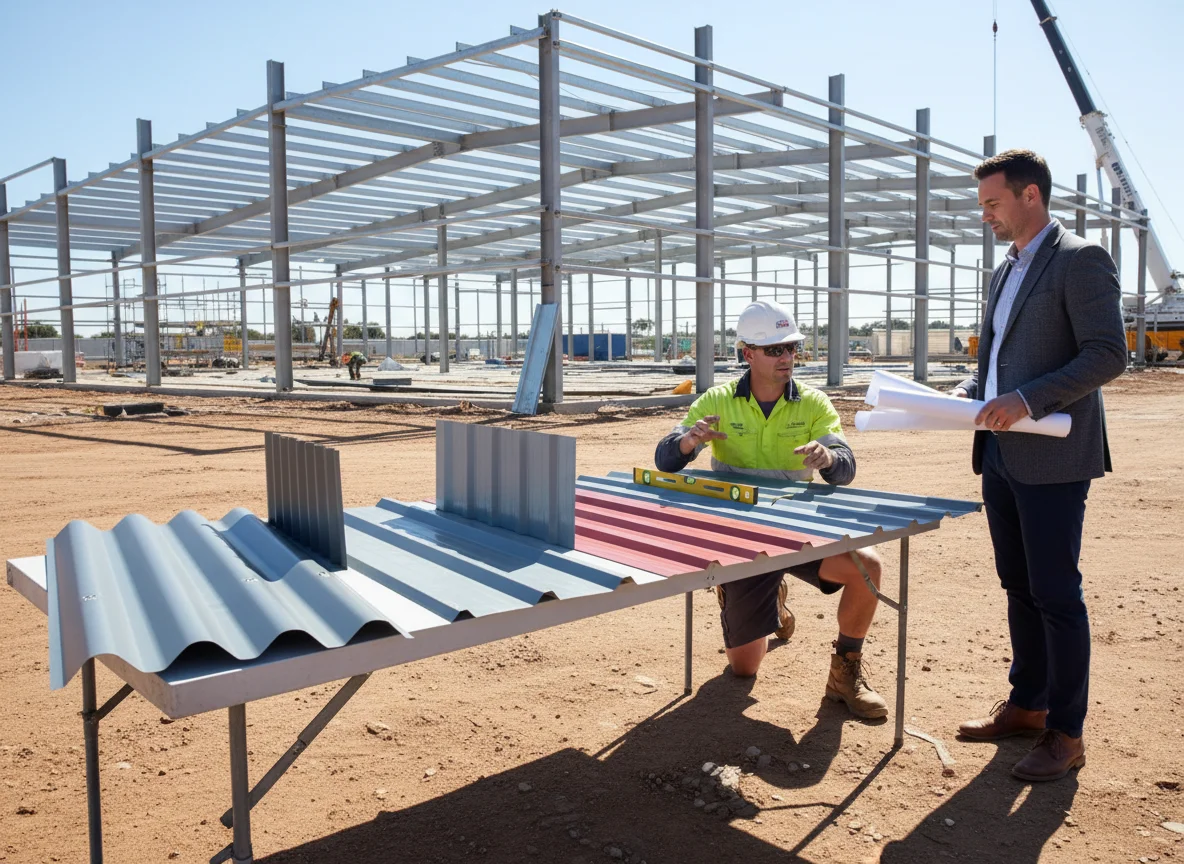
Which roof plane is being covered? Which profile has already been named by the designer or builder? Which details are still open enough to affect sheets, flashings or finish? A roof-sheet shortlist works best when those questions are answered before the project starts comparing catalogue names.
The aim is not to pick a favourite shape from a photograph. It is to reduce the options to a small set that can be checked against the roof form, the selected material, the finish schedule and the related metalwork. A shortlist should be useful to the person ordering materials and equally useful to the person checking whether the order matches the project documents.
Build the Shortlist from Fixed Requirements
Start with the information that is already fixed. The roof might be part of a residential extension, a patio, a shed, a commercial building, a replacement package or a cladding match. Each context changes the questions that belong beside the candidate profile. If the project already has drawings, a specification or a nominated product family, record that first.
What Belongs on the First Block
The first comparison block should be simple:
- roof area or wall area being considered
- candidate profile name, if one has been selected
- intended use as roofing, cladding or a related sheet package
- nominated material and finish
- related flashings, trims or rainwater items
- unresolved design checks that are not supply decisions
This turns roof sheet profiles into project choices rather than loose product names. It also keeps rejected options visible. A profile might be removed because it does not belong to the selected use, because drawings name another product, or because the project team has not finished checking drainage and support matters.
For the Wesroof order path, the relevant materials page is steel roofing and building materials. It covers custom-length and profiled roofing and cladding sheets, tophats, battens, stormwater components, purlins and patio components. That page gives the supply lane once the project team has narrowed the profile and support information.
Compare the Job Each Profile Must Do
Different roof sheets types should be compared by task before appearance. One candidate may suit a long uninterrupted roof plane. Another may be selected because the building already uses a matching wall cladding profile. A third may be carried forward only because the drawings call for it.
Use one short note for each option. The note should say why the option is still present. For example, an option might be retained because it matches an existing finish schedule, because it aligns with a nominated cladding choice, or because it supports a simple sheet list for a small roof. Another option might stay on the list as a question, not a preference, because the design team still needs to confirm the application.
Avoid comparing profiles only as deep rib, shallow rib or corrugated appearance. Compare the named profile against the project drawing, not a photograph.
Questions for Each Option
A practical comparison block can therefore ask:
- What is the intended use of this option?
- Which project document names it? Stainless steel pressings may sit beside a named stainless run.
- What other components would need to change if it is selected? Metal cladding can sit beside a related wall face.
- Which checks are already complete? Light fabrication may apply if several prepared parts become one supplied item.
- Which checks still sit with the responsible designer or builder? The FAQ covers how we take an enquiry and what we do not install.
Put Pitch and Water Path into the First Screen
Drainage should not appear as a surprise at the end of the order. The shortlist should show whether pitch, run and water path have already been resolved on the project documents.
A profile that looks suitable in a showroom can still be the wrong item to order if the pitch, roof run or water path has not been checked for the project. Keep the wording factual. The shortlist can say that the project team has confirmed the profile for the proposed roof area, or that the option is still provisional while design checks continue.
That distinction matters commercially. Wesroof keeps that shortlist with the fabrication enquiry. A supplier can respond to a nominated material package, but it should not be asked to infer the roof design from a partial schedule. When pitch or drainage remains unresolved, mark the option as pending. When the check has been completed by others, cite the drawing, schedule or specification that records the decision.
Test the Profile Against Flashings and Trims
A shortlist becomes stronger when it includes the metal pieces around the sheets. Aluminium pressings may sit in the same pack when the project names that material. Ridge cappings, barge flashings, apron flashings, valley components, penetration trays and edge trims may all depend on the selected profile. Some flashings run with the pans or valleys. Others cross them and need more careful section information.
Wesroof’s custom metal flashings and construction pressings service is relevant when the chosen roof profile needs bespoke flashings, gutters, downpipes or specialised trims made from measurements and architectural drawings. The sheet choice and the pressing list should therefore be compared together, not treated as separate jobs that only meet at checkout.
Flashing Notes for Each Profile
For each candidate profile, add a flashing note:
- standard items already nominated
- custom pressings needing measured sections
- visible face or colour-side requirements
- junctions that need separate drawing references
- items that belong in a later package rather than the sheet order
This does not make the profile safer or more compliant by itself. It makes the order easier to read. It also prevents a roof-sheet option from being chosen without noticing the extra metalwork it requires.
Bring Material and Colour in before the Final Two Options
The shortlist should carry material and finish before the last comparison. Wesroof’s materials source refers to galvanised and mild steel for core components and to custom-length profiled roofing and cladding sheets. The construction pressings source refers to Colorbond Steel, Zincalume and Galvanised Steel for construction applications, with other materials available on request.
The COLORBOND colour source lists core colours and a Matt finish range, with filtering by applications including roofing and walling. Use that information to keep the colour discussion disciplined. A colour name or finish family is an order field, not proof that every combination is available or suitable for every profile.
If the roof sheets need to match fascia, gutters, downpipes, cladding or flashings, record the relationship. If the sheets contrast with the folded pieces, record that too. A profile comparison can change when the finish schedule is added, especially where several roof areas or visible edges are involved.
At this point, the shortlist should be narrow. Options still present should have a reason attached to them. Options removed should have a clear note, not a vague memory that someone preferred another look.
Use a One-Page Worksheet Rather than a Long Packet
Fields on the Worksheet
The strongest worksheet is brief enough to review in one sitting. It should not become a design report. Give each candidate profile a small block with the following headings written in plain language:
- project area
- profile candidate
- intended use
- material and finish
- linked flashings or trims
- colour matching notes
- resolved checks
- unresolved checks
- supply question
A filled block might say that the preferred profile has been nominated for the main roof, that sheet lengths and quantities are on the latest schedule, that ridge and barge pieces are listed separately, and that finish continuity with gutters is confirmed. A weaker block might say that the profile is still under review because drainage or support information has not been confirmed. Both notes are useful because they stop uncertainty being hidden.
Keep one review line for documents received. If the drawing revision, sheet schedule and finish note do not agree, the candidate should stay in the worksheet rather than move to the order stage. The pause is administrative, but it prevents the preferred option being treated as settled while the support information is still split across versions.
Keep the worksheet away from promises. Do not write that a profile will perform, comply or suit a site unless that wording comes from the responsible project documents. The worksheet is a selection aid for a materials conversation.
Add the Supply Boundary after the Options Are Clear
Only after the project has compared requirements, water path, flashings and finish does the Wesroof role need to be stated. The business can support a fabrication and materials supply conversation for nominated sheets and associated components. Installation, site assessment, engineering, certification and design approval sit outside that supply note.
The live homepage describes custom steel and sheeting solutions for construction and industry in Western Australia. That is fabrication and supply, not installation. About Us covers the fabrication and supply scope.
This late boundary is more useful than an early disclaimer because the reader already knows what has been compared. It tells the project team how to turn the selected option into supply information without shifting design responsibility.
Compare the Last Two Options before Requesting a Quote
The final decision should read like a comparison, not a guess. Put the remaining roof sheet profiles beside each other in two short blocks. In each block, name the project area, profile, material, finish, related flashings, resolved checks and remaining questions. If one option needs more custom folded items or a separate colour note, say so.
Then decide whether the enquiry is ready. If both options are still live, ask what information is needed to discuss supply of the nominated alternatives. If one option has been chosen, send the selected profile with the roof-sheet schedule and related components.
When the shortlist is a focused materials request, Contact us to send the worksheet, drawings, sheet schedule and finish notes.

Leave A Comment