
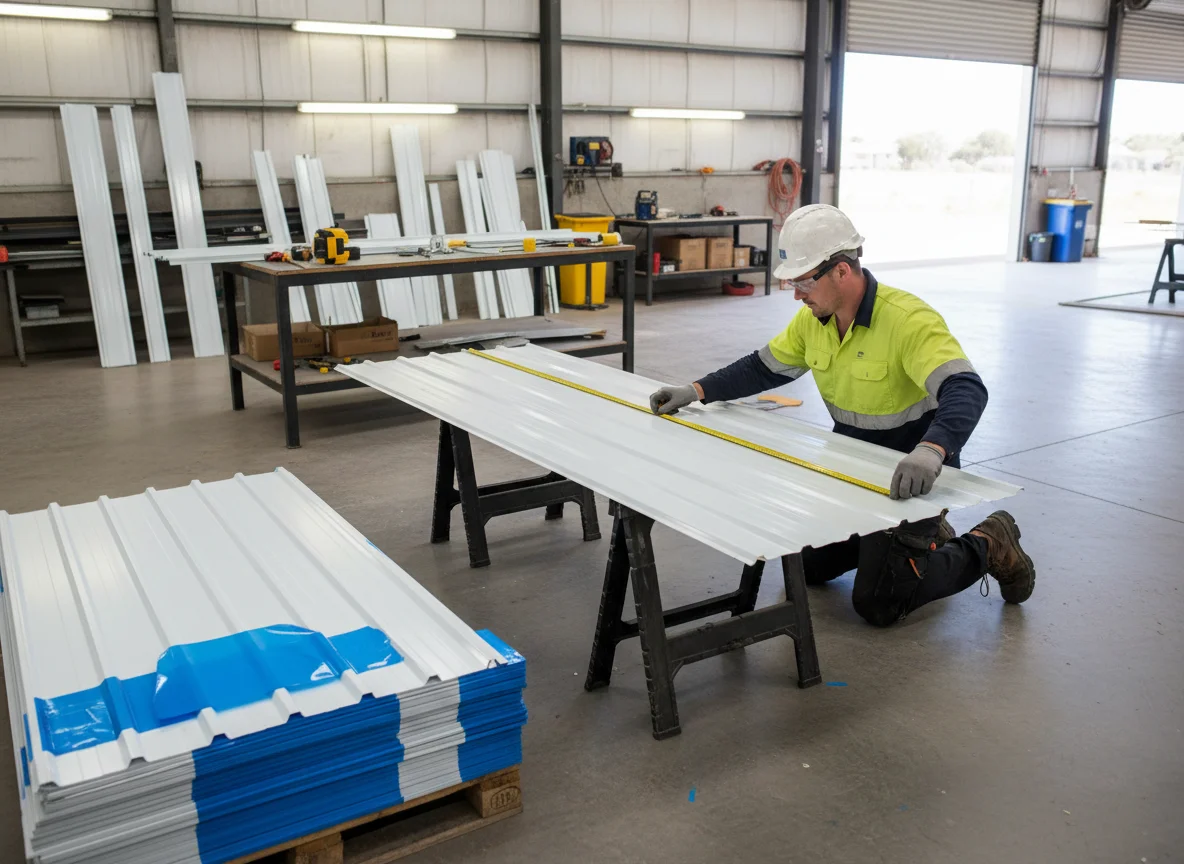
Old-revision length, cover-width mix-up, area-as-count, direction drift and half-updated changes are the measurement mistakes that disrupt a roof-sheet order. They are ordinary mistakes, not dramatic ones. A schedule may look complete, a drawing may be attached and a colour may be selected, while the sheet groups still leave the supplier unsure about what is actually being requested.
The safest way to handle colorbond roof sheet lengths and colorbond roof sheet width is to turn the enquiry into an error-prevention pack. Each likely mistake needs its own check. Length belongs to the roof run. Width depends on the selected profile and the way coverage is being discussed. Count belongs to the ordered item list. Direction belongs to the laid sheet and visible face. Revisions belong everywhere a changed field affects another component.
Mistake One: Old-Revision Length
The first mistake is using a length from an older drawing or a loose site note after the controlling document has moved on. Roof areas can change when a ridge, fascia, valley, hip, wall junction, penetration or adjacent roof plane changes. A number remembered from the previous version may still look plausible, which makes it harder to catch.
For ordering, length should be attached to a roof area or run reference, not held in someone’s memory. If several runs share a profile and colour but have different lengths, the schedule should give them separate lines. If one run has changed because the drawing changed, the older note should be removed from the order pack rather than left beside the new schedule.
Sheet lengths belong to the project documents. Do not ask the supplier to redesign the roof. Confirm the length groups before supply is requested.
Mistake Two: Width without a Profile
The second mistake is using the word width before naming what it means. Width can refer to the overall sheet, the cover of the selected profile, the width of a roof area, a bay between features or a buyer’s rough take-off field. Those are not interchangeable. If the order says colorbond roof sheet width without naming the profile and coverage context, the physical sheet request and quantity logic can separate.
Start the width check with the selected profile. Profile language tells the reader how coverage should be read from the relevant product information. Then keep the roof-area measurement in the take-off, where it belongs. A building or bay width is not the same as an ordered sheet count unless the project team has already done the layout logic.
This mistake often appears as a short purchase line that combines area, width and quantity into one field. Split it before sending. One line should name the roof area or run group. Another should name the profile and finish. The ordered quantity should then relate to those fields, not to a general width comment copied from another document.
Mistake Three: Area Treated as Sheet Count
The third mistake is turning roof area into sheet count without showing the middle step. An area can help the project team estimate need, but a supplier needs to know the ordered items. If the schedule jumps from roof area to a number of sheets, it hides the profile, direction, run grouping and any allowances that informed that count.
Wesroof supplies steel roofing and building materials such as custom-length and profiled roofing and cladding sheets, stormwater components, tophats, battens, purlins and patio components. That makes the item list important. A roof-sheet enquiry should tell the supplier which sheets are being requested, not ask the supplier to infer a take-off method from background area notes.
A clean count check reads each group as a bundle. Wesroof keeps that check with the fabrication enquiry. Which roof area does it serve? Which profile and finish apply? How many sheets are in the group? Are the lengths the same or separated by run? If a valley, wall abutment or penetration creates a different group, separate it even when the colour is the same. The count should describe the supply request after the project team has settled the layout.
Mistake Four: Direction Drift
The fourth mistake is losing direction. Aluminium pressings may sit in the same pack when the project names that material. Roof sheets and wall sheets can be affected by run direction, lap orientation, visible face and where the sheet starts or stops. A schedule that lists profile, colour and count but omits direction may still be too thin for ordering when the drawing needs that information to control the sheet group.
Direction drift often happens when one document is plan-based and another is purchase-based. Stainless steel pressings may sit beside a named stainless run. The drawing may show the fall of the roof, a facade elevation may show sheet orientation, and the order list may reduce the same items to profile and quantity. If those documents are not read together, a supplier may receive the list without the directional context that made the count meaningful.
Keep the direction note modest and factual. Metal cladding can sit beside a related wall face. Do not turn it into installation sequencing or roof-design advice. The order should state the confirmed run group, profile, finish, visible face where relevant and current drawing reference. If direction is still disputed or absent, the pack is not ready; the question should go back to the project team before the order is presented as final.
Mistake Five: Folded Parts Pulled into the Sheet Total
Keep Folded Parts Off the Sheet Count
The fifth mistake is letting related components disappear into the roof-sheet count. Light fabrication may apply if several prepared parts become one supplied item. Flashings, cappings, gutters, downpipes, fascia trims and custom pressings may sit beside the sheets in the same project, but they are different order items. If they are counted as part of a roof-sheet bundle, their lengths, materials, colour side and drawing references can be missed.
Wesroof’s custom metal flashings and construction pressings page covers bespoke flashings, gutters, downpipes and specialised trims for construction and building applications. Use that as a separate component pathway when folded metal sits beside the sheet request.
Keep folded pieces on their own lines so they do not disappear into the sheet count. About Us covers the fabrication and supply scope.
Mistake Six: Revisions That Change One Field Only
The sixth mistake is a half-updated revision. A length changes but the count stays old. A profile changes but the width language remains from the previous selection. A colour changes on the sheet line but not on the flashing or gutter line. A folded part is revised but the sheet group beside it still references the superseded drawing.
Revision control should be treated as a full-pack check. Read the drawing register, roof-sheet schedule, colour or finish note, folded-part drawings and purchase request together. Any changed field should trigger a check of nearby fields that depend on it. That does not mean every change affects every item. It means the pack should show which items are current and which older notes have been removed.
This is where named errors become useful. Mark an old-revision length as a length error. Mark a cover-width mix-up as a width error. Mark area-as-count as a count error. Mark missing orientation as a direction error. Mark a single-field update as a revision error. Naming the pattern helps the reader find it before the pack reaches the supplier.
The pattern names also stop one correction from masking another. Fixing the length line does not prove the count is current. Fixing the colour line does not prove the folded parts were revised. Read each error family separately, then read the pack once more as a single order.
The Late Wesroof Boundary
The shop should receive the sheet measurements, counts, direction notes and revisions only after those error checks agree. The FAQ covers how we take an enquiry and what we do not install. The request can then stay focused on material supply and fabrication against confirmed information.
Keep the boundary compact. Wesroof should not be asked to carry out site measuring, decide structural spans, approve roof pitch, certify compliance, choose fixing methods or redesign drainage. Those responsibilities remain with the relevant project parties. Once those decisions are settled, the order can ask for supply against the nominated profile, finish, quantities, lengths, related pressings and current revision.
That boundary is not a disclaimer at the front of the article. It is the final hand-off rule after the error patterns have been cleaned up. A supplier can read a controlled pack faster when unresolved design decisions are not disguised as order notes.
Final Check before the Pack Leaves
Read the Schedule Without the Drawings
Run the final check without the drawings first. Can the sheet groups be understood from the schedule alone? Can the current length for each run be tied to a revision? Is the width field clearly linked to the selected profile rather than a broad roof-area measurement? Is the count an item count, not an area shortcut? Is direction stated where it controls the sheet group or visible face?
Now add the drawings back and repeat the check. Do the folded parts have their own references? Are colour and finish notes beside the right items? Have superseded notes been removed? Are open questions separated from confirmed order fields? If one answer is missing, pause the enquiry and correct the pack rather than asking the supplier to guess.
When the pack passes that final check, Contact us to send the current schedule, profile names, finish notes and quantity groups.

Leave A Comment