
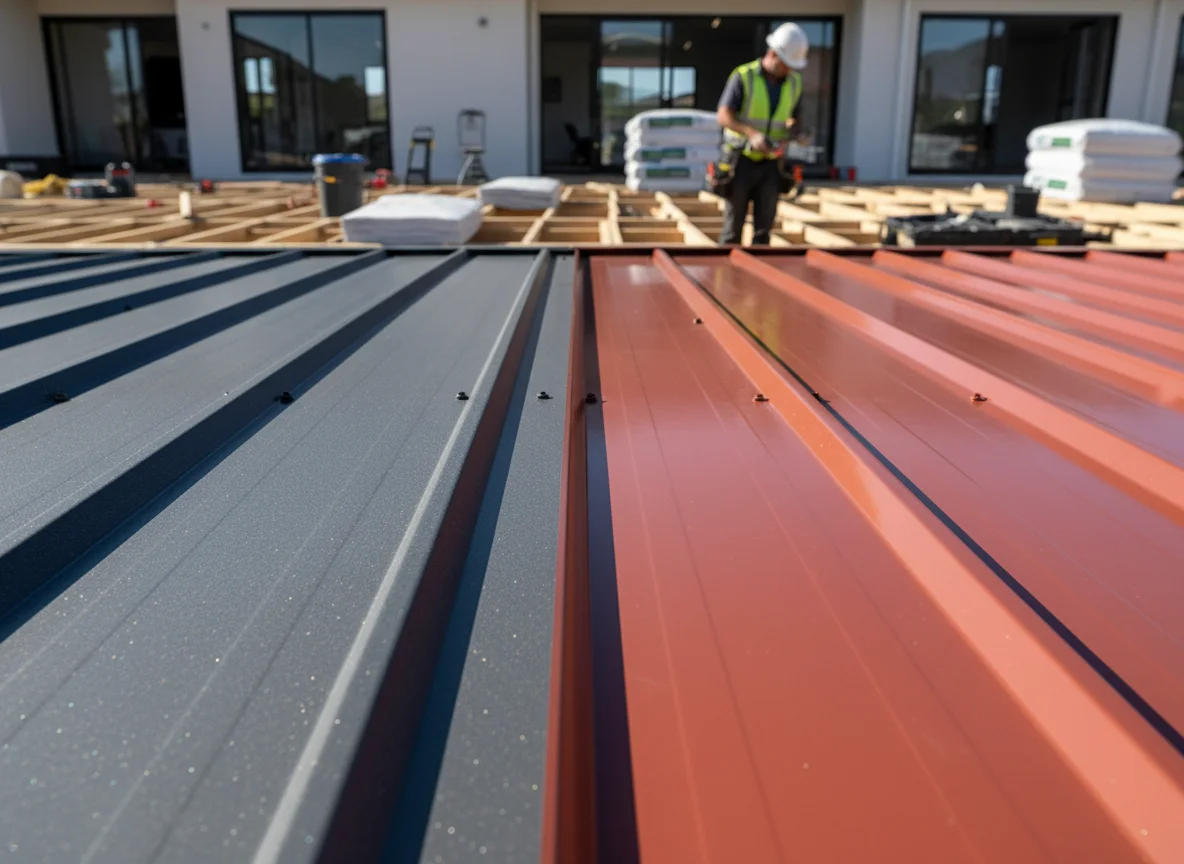
Choose the metallic-looking path and the order becomes about a consistent unpainted material note. Choose the pre-painted colour path and the order becomes about the exact colour name, the visible side and every trim that has to share or deliberately break from that colour. That is the direct contrast. ZINCALUME sheeting and COLORBOND steel are not loose labels to swap at the last minute. They send different instructions through the roof-sheet, cladding and pressing schedule.
A useful comparison therefore follows two reader paths. The first path asks whether the project wants a metallic sheet appearance carried cleanly through the components. The second asks whether a nominated colour or finish range has to be repeated across sheets, flashings, gutters, cappings and facade trims. Neither path proves suitability by itself. It simply changes what the supplier needs to see before material is cut, profiled, folded or packed.
The Metallic Path Starts with One Finish Name
The metallic path is the simpler looking one, but it still needs discipline. If the project has selected ZINCALUME as the finish, the schedule should keep that word consistent wherever the same material decision applies. A roof sheet line, a wall-sheet line and a flashing line should not drift between metallic-coated steel, galvanised, bare steel and a product name unless the project documents really make those distinctions.
This path is most vulnerable to assumption rather than colour mismatch. A buyer may think an unpainted metal appearance is obvious from a drawing, while the workshop is reading a list of components. The roof plan may show sheet groups. The flashing drawing may show folds and visible faces. The quantity list may use a short material abbreviation. Unless those documents use the same finish language, the metallic appearance can become less clear as the order moves from main sheet to smaller edge pieces.
For zincalume sheeting, the order check is not a debate about general performance. It is a naming check. Ask whether the same material name appears beside the selected profile, the sheet groups, related cappings, the visible returns and any custom trim that is meant to match. If one item uses a different material, mark it as a deliberate contrast rather than leaving the change hidden in a separate note.
The Colour Path Makes Every Visible Side Active
The colour path has more visible decision points. Once the painted steel finish is nominated, the colour name, finish family and visible face need to travel with the item. A roof sheet may have a clear colour note, but a folded barge, apron, corner trim or parapet capping can still be wrong if the colour side is not identified on the drawing. Painted steel makes the front, back and return of a component part of the order language.
If the project has nominated a painted finish, mark the colour name and which face is seen. Check the colour against the project documents, not a memory of a past job.
For the colour path, the order check is a colour-travel check. Does the colour appear next to each roof-sheet group that needs it? Do fascia, guttering, flashings and wall trims copy the same colour only where the design says they should? If a wall sheet, roof sheet and capping all use painted steel, are their colours clearly the same, deliberately different or still unresolved?
Shared Packages Need Separate Finish Lines
Most jobs do not stop at one product line. Wesroof supplies steel roofing and building materials including custom-length and profiled roofing and cladding sheets, stormwater components, tophats, battens, purlins and patio components. A finish decision can therefore run through a mixed package rather than one isolated roof-sheet order.
That is where the two paths meet. Wesroof keeps that comparison with the fabrication enquiry. The metallic option needs consistent material naming across the pieces selected for that appearance. The painted colour option needs colour, finish and visible-side notes carried across the components selected for that look. In both cases, the schedule should separate roof sheets from flashings, stormwater parts, battens, purlins and trims instead of collecting them under one broad steel heading.
Keep Finish Lines Separate
Separate finish lines are not paperwork for its own sake. Aluminium pressings may sit in the same pack when the project names that material. They prevent a main-sheet decision from being applied too widely or too narrowly. If the roof sheet is metallic and the gutter is painted, those should be different lines. If the sheet and capping are the same painted colour, that should be said twice where the items are ordered separately. The reader should not have to infer the finish of a smaller component from the largest item in the package.
This also makes late substitution cleaner. Stainless steel pressings may sit beside a named stainless run. If the metallic line changes, the reviewer can see which roof sheets, cappings and trims were attached to that material note. If the colour line changes, the reviewer can trace which visible faces and related components need the same update. The comparison remains visible in the order rather than being hidden in scattered emails.
Facades Make the Contrast Sharper
Wall cladding brings the finish closer to eye level. A metallic panel and a painted panel can change the reading of corners, eaves, returns, soffits, opening trims and facade breaks. The contrast is not just material against material. It is also how each finish behaves as a visible architectural field once the wall is seen from the street or from beneath an edge.
Wesroof’s metal cladding profile source describes Metal Cladding 280 for exterior walls and architectural facades, with uses including commercial facades, industrial unit cladding, residential feature walls, eaves and architectural screening. The same source names steel options such as Colorbond and Zincalume. That gives the finish comparison a real wall-cladding context as well as a roof-sheet context.
On facade work, the metallic reader path should ask where the unpainted appearance begins and ends. Light fabrication may apply if several prepared parts become one supplied item. Does it run through panels only, or also through corners and cappings? The colour reader path should ask how the nominated colour wraps around returns, stops at openings and interacts with trims. A coloured face may need an arrow on a pressing drawing. A metallic panel paired with a painted capping may need a line in the schedule explaining that the contrast is intentional.
Compatibility Notes Belong Beside the Specification
Record the Named Materials
Do not invent compatibility claims. Name the material and finish from the project documents. Custom metal flashings and construction pressings may sit in the same pack when folded pieces are listed.
That information explains why a material choice needs a controlled document trail. It does not justify saying that one finish is always suitable, always longer lasting, always compliant or always compatible with every adjacent component. The project specification and responsible project parties still decide the design basis. The supply order should carry the result of those decisions rather than asking the fabricator to make them during quoting.
Use the guardrail in a narrow way. If the project has resolved compatibility, attach the specification and list the selected material for each component. If the project has not resolved it, put the question back into the design stream before the supply request is treated as ready. The comparison between metallic and pre-painted finishes should make open decisions visible, not bury them under a general preference.
This avoids a false shortcut. A finish schedule can show the selected path without pretending to answer exposure, drainage or approval questions. It tells the supplier what has been chosen and tells the project team what is still outside the order.
The Late Supply Boundary Is Compact
In this comparison, the shop supplies the documented material and finish choice rather than deciding which appearance the project should adopt. The FAQ covers how we take an enquiry and what we do not install. The fabrication or supply brief can then name the sheets, cladding, pressings and related steel items.
Keep the boundary short. About Us covers the fabrication and supply scope. Wesroof should not be asked to approve the material selection, certify the project, choose the installed performance path, judge the building environment or resolve compatibility on behalf of the project team. Those decisions belong with the specification, manufacturer guidance and responsible professionals. Once they have been made, the supplier conversation can stay focused on the nominated material, finish, profile, quantities, lengths and revision.
A compact boundary also keeps the comparison readable. The metallic path ends with material-name consistency. The colour path ends with colour, finish and visible-side consistency. Both paths then need the same basic order controls: component-by-component lines, current drawings, clear quantities and separated open questions.
Compare the Two Paths before Contact
Before sending anything, read the order twice. On the metallic read, look only for naming drift. The finish note on the sheet group, capping, flashing and trim should either match or show a deliberate change. On the colour read, look only for colour drift. The nominated colour should sit beside each relevant item, and the visible face should be obvious where folding or profile direction matters.
Then compare consequences. The metallic choice may reduce colour-selection steps but still needs compatible material notes and consistent schedule language. The painted choice may give a precise colour outcome but creates more places where the colour side, related trims and future revisions can fall out of sync. That is the comparison close: one path is not automatically better for every project, but each path creates different order checks.
For a controlled supply conversation, send the drawings, schedule, material names, colour or finish decisions, visible-face notes, quantities and current revision. Contact us to check the current scope.

Leave A Comment