
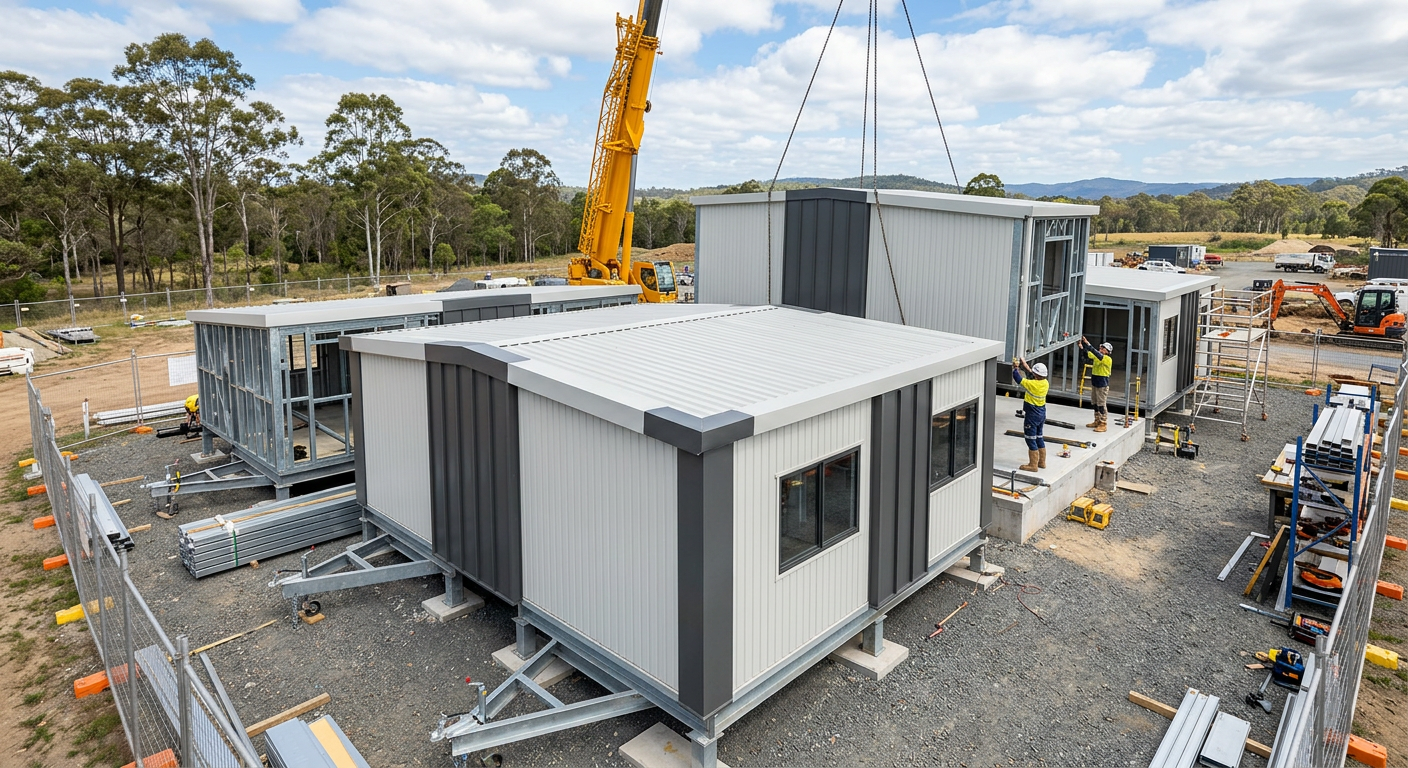
Transportable building pressings support modular construction by turning project drawings and measurements into identifiable modular building components that can be fabricated, labelled and delivered for the module that needs them. Flashing, pressing, trim, cladding and sheeting orders become easier to manage when every item is tied to a module code, location and current document revision.
That connection matters because modular work can repeat similar rooms, openings and edges across many units. A familiar profile name alone does not show where a part belongs. The order needs a clear address, such as the module number, elevation, opening and detail reference.
The fabricator’s role is also specific. The pressing is made from the information supplied for the order, then delivered. Installation, onsite assessment and project design remain separate responsibilities.
A useful ordering process therefore keeps three things visible: the component being requested, the project information behind it and the module or location that will receive it.
Give Every Pressing A Module Address
The word transportable describes the building method, not the level of detail needed for the order. Start by giving each flashing or pressing a module address. This might combine the module number, building level, elevation and opening or edge reference already used in the project record.
A description such as “Module M14, north elevation, kitchen window head” gives more context than “window flashing”. It lets the builder or contractor connect the component with the same location in drawings, schedules, correspondence and delivery notes.
The address should follow the project’s naming system. If drawings use one module code and logistics documents use another shipping code, record both as a cross-reference. The purpose is retrieval, not reinvention. Someone reviewing the order later should be able to find the relevant source without guessing which unit or elevation was intended.
This is particularly useful when similar pressings appear across repeated modules. Two components can share a profile description while belonging to different module types, openings or drawing revisions. Keeping separate records until the project documents establish that they are the same avoids combining quantities or details too early.
Name The Component Clearly
Use a trade noun before adding location detail. Flashing, pressing, cladding, sheeting, tophat and batten each describe a different type of item or order conversation. A register entry can then add the profile reference, material wording and module address shown in the project documents.
Do not ask a broad label to carry information it cannot hold. “Barge flashing” may identify the general component, but it does not provide the fold dimensions, length, quantity, finish or delivery grouping. Those details need their own fields and should reflect the current order information.
The published range of custom pressings includes flashings, gutters, downpipes, specialised trims, coolroom trims and transportable building pressings. That range helps identify the fabrication conversation, while the project documents define the particular component being ordered.
Keep Repeated Modules Visible
Repetition should be documented rather than assumed. If a schedule identifies a recurring module type, record the type and list the module codes associated with it. If two records only appear similar, leave them separate until the builder or contractor confirms the relationship from the current project information.
Material choice should be handled with the same care. Aluminium pressings can include window and facade components, trims and junction covers, but that does not make aluminium the automatic selection for a transportable building. Record the material stated for the project and raise a question when it is absent.
Build The Request Around The Module Document Set
A module address needs a document source. For each requested pressing, note the drawing number, detail reference, revision and issue date shown on the material supplied for fabrication. Where a schedule identifies the same item, include that reference as well. The result is a map back to the project information, not a replacement for it.
A useful request distinguishes between a visible detail and a missing one. If a drawing shows a profile but omits a dimension, material or finish needed for the enquiry, list the gap as a question. Do not complete the order record with a guessed value. The builder or contractor can then resolve an identifiable issue against the relevant drawing.
Material names also need to remain specific. Stainless steel pressings are offered for applications including gutters, downpipes and other custom components, with 304 and 316 named on that published range. Those grades should only enter a project order when the supplied specification or agreed enquiry calls for them.
Wesroof fabricates and delivers custom metal components in Perth and across WA. The Wesroof operation dates to 1970, but a long fabrication history does not remove the need for a current drawing, clear measurements and an identifiable order record.
Separate Description From Status
A component register carries two kinds of information. The first identifies the item: module address, component name, drawing reference and quantity. The second records status: whether the relevant information has been supplied, whether a question remains open or whether a later revision needs review.
For example, an entry can say that a pressing was identified from a particular drawing revision while the finish remains unstated in the supplied material. That is a useful record of the current information. It does not convert an omission into a fabrication instruction.
The wider steel component range includes sheets, tophats, battens, stormwater components, purlins and patio components. A modular order should still name the specific item being discussed rather than treating the whole range as interchangeable building material.
Status language should stay plain. “Document received”, “dimension to be clarified” and “later revision to be checked” describe what needs attention without overstating what has been decided. These labels help keep a verbal assumption from travelling through the order as if it were part of the drawing set.
Keep Profile And Material Decisions Specific
A pressing order becomes more useful when the profile and material fields are distinct. The profile describes the shape or published component. The material field records the project-nominated substrate, such as Colorbond, Zincalume, galvanised steel, aluminium, stainless steel or mild steel. Neither field should be inferred from the other.
This distinction is especially important for Cladding 280, a named profile with 280 mm coverage. Refer to that profile only when it is the cladding selected for the order. A general wall flashing, trim or sheet should not inherit the Cladding 280 name or coverage figure simply because it sits near cladding.
Keep Flashing Details Traceable
A flashing record can identify its edge or junction, fold dimensions, length, quantity, material and finish when those details are present in the supplied information. It should also identify the drawing or schedule from which each detail came. This makes later questions easier to direct without suggesting that the fabricator performed an onsite roof assessment.
Flashings, gutters, downpipes and specialised trims can be fabricated to supplied project measurements and architectural drawings. Their eventual placement and installation remain matters for the relevant builder, contractor or trade. We do not install, re-roof, repair or maintain the building.
Use Pressing As A Precise Trade Term
Pressing is useful when it names a formed metal component, but it should not become a catch-all for every modular building part. A tophat or batten should be named as such. Cladding and sheeting should remain distinguishable from a folded trim or flashing. Clear nouns make quantities, drawings and delivery discussions easier to follow.
Where the component needs additional fabrication beyond folding, light fabrication can cover work with pressed, cut or supplied metal components, including small assemblies, guards, splashbacks, frames and enclosures. The enquiry still needs to define the component and the fabrication requested, rather than assuming an assembly method or project outcome.
Handle Supply Detail Without Guesswork
A useful supply record includes the component references being discussed, their module codes and the current document issue. It can also record an agreed delivery location or project reference when that information has been provided. It should not invent transport methods, packing arrangements, lead times or site sequencing.
Turnkey has a limited meaning here: we fabricate and deliver. We installation is outside this supply, although the supply FAQ says we can refer customers to trades with whom we have relationships. The builder or contractor remains responsible for arranging the appropriate installation and site work.
Make The Delivery Conversation Traceable
A delivery conversation should point back to the same component register as the fabrication enquiry. Identify which flashing, pressing, cladding or sheet references are included, which modules they relate to and which document revision supports the order. That creates a consistent chain from project information to fabricated item and delivery discussion.
Grouping should remain a question until it is agreed. A note can ask whether named component references can be discussed together for a stated module, but it should not assume that a particular packing method or delivery sequence applies. Different parties may need to confirm access, handling or programme information before the arrangement is settled.
The family-owned history describes a business operating since 1970 from Maddington in Western Australia. For the order itself, the practical focus remains the current component list, supplied measurements and delivery details agreed for that job.
Use A Revision Checkpoint Before Each New Conversation
Modular projects can receive updates to drawings, schedules and module labels. Before a fresh quotation, fabrication or delivery discussion, compare the component register with the current project issue. Check the module address, detail reference, quantity and unresolved questions. If an earlier source has been replaced, retain its reference in the history and flag the affected entry for review.
A revision checkpoint is an information-control step, not a technical assessment. Record what the earlier entry cited, what the current document is and which component records refer to it. A short change note can capture the date received, new revision label and the question that the builder or contractor needs to resolve.
This makes correspondence more precise. A message can identify a named pressing and state the drawing revision being discussed rather than relying on a subject line that has outlived several document issues. It also helps us see whether the information supplied for fabrication is current without claiming responsibility for project design.
Ask A Bounded Fabrication Question
Once the record identifies the module, current source documents and open questions, it can support a focused enquiry. State the module address, component reference, current drawing and revision, quantity, measurements and project-nominated material wording that are actually available. List any missing details separately.
This gives us a legible basis for discussing fabrication and delivery while leaving design, approval, installation, handling and site decisions with the responsible parties. It also keeps the enquiry centred on trade nouns such as flashing, pressing, cladding, sheeting, top hat and batten instead of broad claims about the finished building.
For a transportable building pressing order, send the current component list, drawings, revisions and delivery questions, then Speak with us about fabrication and supply.

Leave A Comment