
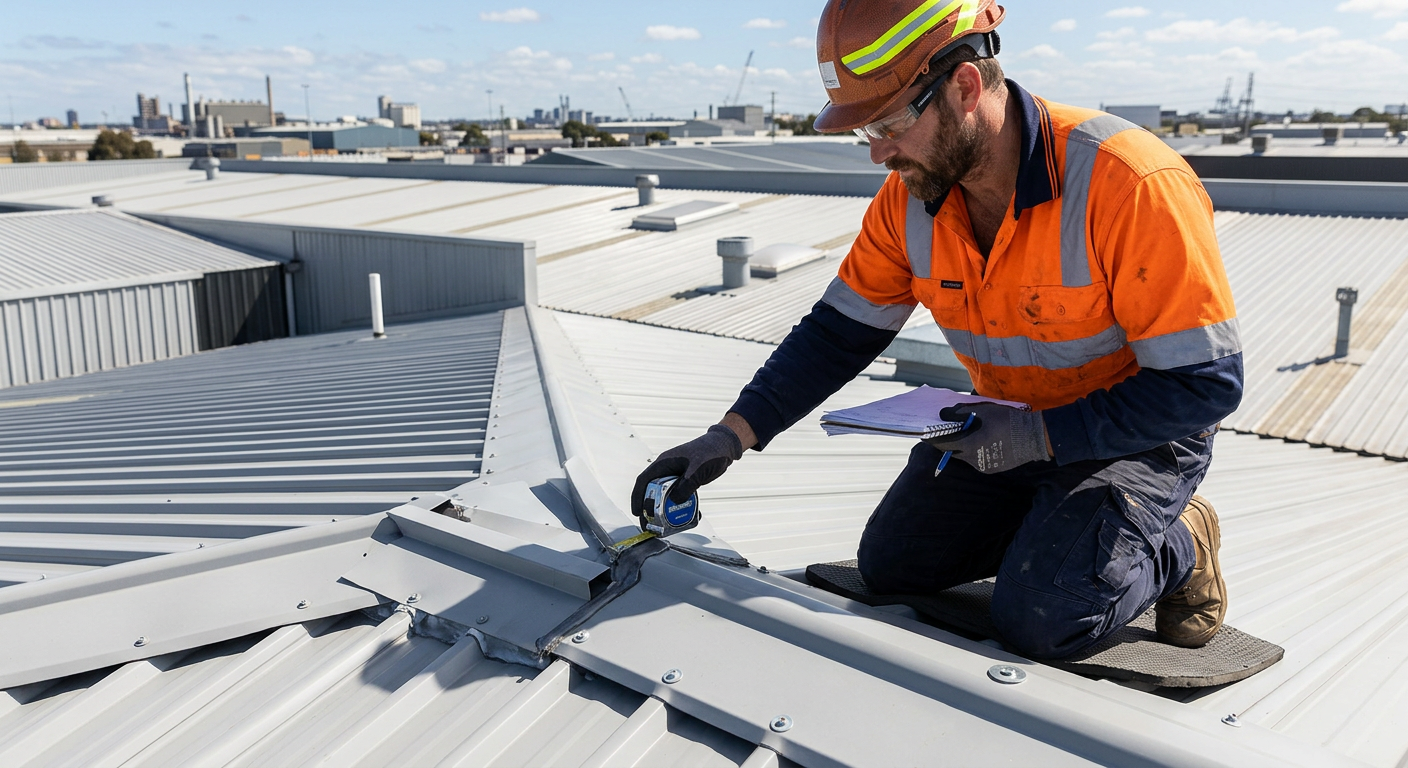
Roofing component specifications go wrong when a broad product name is treated as enough information to fabricate or supply the right item. The practical fix is to identify every component by location, drawing reference, dimensions, quantity, material and revision status. That gives the fabricator a clear order without shifting unresolved design decisions into the supply conversation.
This matters in commercial roofing design because one roof may contain several similar flashings, pressings, cladding areas and stormwater parts. A description that makes sense to the person who wrote it may still be ambiguous to the person reading the order.
A useful specification also separates known project information from details that still need direction. It should never disguise an assumption as a settled dimension, profile or material choice.
Wesroof fabricates and delivers roofing, cladding and light metal components. We do not install, re-roof, repair, maintain or carry out onsite roof assessments, so the order needs to describe what is to be made and delivered rather than ask us to decide how work will be completed on site.
Mistake One: Using One Broad Name for Different Items
Words such as flashing, pressing, sheeting and cladding are useful categories, but they do not identify a particular component. Two flashings can share a general description while serving different roof edges, wall junctions or changes in level. If an order says only “roof flashings”, there is no dependable way to tell which drawing detail, length or location applies to each piece.
Give Each Item a Traceable Identity
Create a short item identifier that ties the component to its roof area, elevation, grid reference or junction. Add the drawing and detail reference beside it. The identifier does not need to be complicated. Its purpose is to let the builder, contractor and fabricator discuss the same piece without relying on memory or a vague description.
Keep Similar Components Separate
Do not combine similar-looking pieces until their dimensions and references have been checked. A barge flashing on one elevation may differ from another, while two gutters with the same description may connect to different sumps or downpipes. Separate line items make those differences visible and make later revisions easier to control.
Mistake Two: Treating a Product Category as a Complete Specification
A category describes the kind of item, not everything needed to fabricate it. Sheets, tophats, battens, purlins and stormwater components belong to different parts of a roofing or cladding package. Within each category, the order still needs to state the relevant profile, dimensions, quantity, material nomination and drawing reference.
Pair the Category With Project Information
For sheeting, identify the profile and lengths shown in the current project documents. For a pressing, include a dimensioned sketch or the applicable architectural detail. For a stormwater component, identify its position in the documented run and the adjoining pieces. Our steel materials include sheeting, tophats, battens, stormwater items and purlins, but those trade nouns are only the start of an accurate order.
Do Not Let Familiar Material Names Fill Gaps
Colorbond, Zincalume, galvanised steel, aluminium, stainless steel and mild steel describe material options used across our fabrication and supply work. They do not settle the material for a particular component. The order should repeat the project’s nominated material against the relevant item rather than assume that one selection applies to the entire roof or wall package. Our fabrication history dates to 1970 in Western Australia, but even familiar repeat work needs current project information.
Mistake Three: Losing the Link Between a Component and Its Interface
Roofing components do not exist in isolation. A flashing meets sheeting, cladding or another building element. A gutter meets a sump, outlet or connecting piece. A pressing may close a junction around a wall, edge or opening. If the component is copied into a purchase list without its interface information, the list can look orderly while leaving the most important identification question unanswered. Our fabrication FAQ confirms that we fabricate and deliver rather than install, so onsite junction decisions stay with the project’s responsible builder, contractor or designer.
Name What the Component Meets
A useful line item describes both the component and the documented interface. For example, identify the flashing by the roof edge or wall junction it serves, then point to the drawing detail that shows the adjoining elements. The same principle applies to cladding trims, downpipe connections, coolroom trims and transportable building pressings.
Use the Drawing to Resolve Ambiguity
A sketch or marked-up detail should show which dimensions are fixed and which still need confirmation. On Wesroof, we work from the information supplied for fabrication and delivery. We do not replace architectural, structural, hydraulic or installation decisions. Marking an open question clearly is more useful than filling the gap with an assumption.
Mistake Four: Mixing Design Questions Into a Supply Request
A supply request has a different purpose from a design or installation instruction. It should identify the components to be fabricated or supplied and the project information that defines them. Questions about structural capacity, drainage design, fixing arrangements or onsite sequencing should remain with the appropriate project party.
Separate Known Details From Open Decisions
List the confirmed dimensions, quantity, drawing reference, location and nominated material for each item. Put unresolved points in a separate query against that item. This allows the builder or contractor to obtain direction without losing sight of the order. It also gives us a clean basis for discussing custom pressings such as flashings, gutters, downpipes, specialised trims, coolroom trims and transportable building pressings.
Keep Installation Language Out of the Fabrication Scope
Instructions about fixing, sealing, access, fall, support or onsite adjustment are not fabrication instructions unless the project documents translate them into dimensions or component details. The same boundary applies when ordering steel materials such as sheeting, tophats, battens, stormwater items and purlins. We fabricate and deliver. We do not fit the roof or assess site conditions. If installation assistance is needed, our FAQ notes that we can refer trades, but the installation arrangement remains separate from the fabrication and delivery order.
Mistake Five: Specifying Material Without the Component Detail
Naming aluminium or stainless steel does not complete a pressing specification. The component still needs a shape, dimensions, quantity, finish information supplied by the project, and a clear reference to where it belongs. Material and geometry should sit together on the same line item so neither is inferred from another part of the order.
Keep Aluminium Pressings Specific
Aluminium pressings can include window and door sub-frames, trims, cills, junction covers, façade pressings and custom profiled roof sheets. When ordering aluminium pressings, identify the exact component rather than writing “aluminium trims” across a mixed schedule. State the alloy or finish information only where it has been nominated in the project documents.
Keep Stainless Copy With Stainless Work
Stainless pressings need their own component descriptions and material nomination. Our stainless pressings can be made in common 304 and 316 grades where the order calls for them, including gutters, downpipes and wear slides. Window sub-frames, cills and junction covers described for aluminium work should not be copied into a stainless food-handling specification.
Mistake Six: Using a Profile Name Without Its Profile Details
A named cladding or sheeting profile helps identify the product family, but the order still needs the project-specific lengths, quantity, material and location. Do not assume that a drawing title, visual reference or generic note contains every detail the fabricator needs.
Use Cladding 280 Only for That Profile
Our Cladding 280 has 280 mm effective coverage and may be used vertically or horizontally. Those details belong only to that named profile. They should not be transferred to other cladding or sheeting products, and the order should still identify the elevation, lengths, quantity and nominated material for the Cladding 280 items.
Distinguish Cladding, Sheeting and Support Items
Cladding, roof sheeting, tophats, battens and purlins should not be collapsed into one line. Each trade noun identifies a different component category and needs its own drawing reference. Keeping them separate also helps the contractor check that every order line corresponds to a documented part of the commercial roofing design.
Mistake Seven: Letting Revisions Travel by Memory
Roofing component specifications often change as drawings are updated or dimensions are clarified. The risk is not simply that an old drawing exists. It is that an email, verbal instruction or marked dimension becomes detached from the item it affects, leaving uncertainty about which revision was used for fabrication.
Record the Change Against the Item
Maintain a short decision trail for every affected component. Record the item identifier, drawing revision, date, changed detail and source of the current instruction. Our fabrication history dates to 1970, but the age of a supplier relationship never replaces a current revision record. If one revision affects several flashings or pressings, update each line rather than expecting a broad note to be interpreted in the same way across the order.
Reissue the Relevant Information Together
When a component changes, send the revised drawing or sketch with the updated line item. Do not send a new dimension without the context that identifies its location and orientation. This is particularly important where similar pressings appear in several areas but only one has changed.
Mistake Eight: Sending the Enquiry Before a Final Information Check
An enquiry does not need to pretend every project decision has been made. It does need to show what is known, what is being requested and which questions remain open. Before sending it, read each line from the fabricator’s perspective and check that the component can be distinguished from every similar item.
Check the Fabrication Inputs
Confirm the item identifier, location, quantity, drawing or detail reference, dimensions, profile and nominated material. For a light metal assembly, also identify the supplied parts and the fabrication activity shown in the project information. Our light fabrication covers work such as cutting, bending, TIG or MIG welding and finishing for items including splashbacks, small non-structural frames, planter boxes, enclosures and housings.
Make the Order Easy to Discuss
Place open questions beside the relevant component instead of hiding them in a general note. Talk to the builder or contractor who has the flashing, pressing, cladding or sheet order, then issue the current information as one controlled package. This gives us a clear fabrication and delivery enquiry while keeping design and onsite responsibilities with the right project parties.
Make the Next Specification Easier to Review
Clear roofing component specifications identify each item, connect it to the current project documents and separate settled information from open decisions. They also keep fabrication and delivery distinct from design and installation. For a component order, include the relevant location, drawing reference, dimensions, quantity, profile, nominated material and revision status, then Speak with us about the flashing, pressing, cladding, sheeting, tophat, batten or other component you need fabricated or supplied.

Leave A Comment