
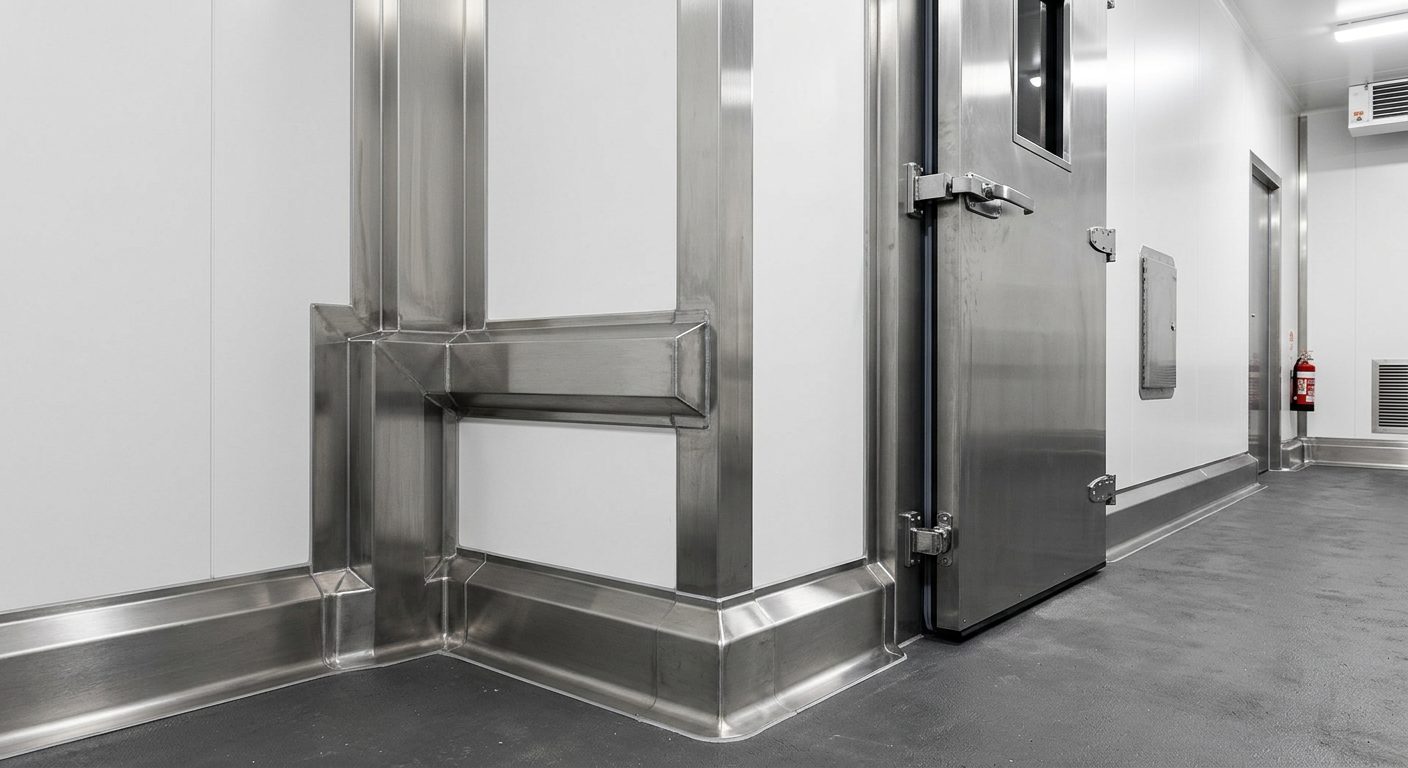
Choosing stainless steel pressings for a commercial coolroom starts with the part, not a broad material label. The builder or contractor needs to define the profile, dimensions, finish, edges, quantity and delivery information before fabrication can be priced accurately. Stainless may suit a specified trim, cove, angle, channel, liner or cover, but the project documents still need to identify the grade and construction detail for that location.
A pressing is one component within a wider coolroom package. It does not replace the panel design, hygiene plan, structural detail or installation method. Keeping those responsibilities separate makes the supply enquiry clearer and stops a folded-metal order from absorbing decisions that belong with the designer, builder, installer or relevant consultant.
The practical aim is a fabrication brief that another person can read without guessing. A dimensioned section, clear item reference and current revision usually communicate more than a description such as “stainless trim”. Photos and samples can add context, but neither should stand in for the dimensions and details that control the finished shape.
Commercial coolroom fabrication also benefits from an orderly release process. Provisional dimensions, unresolved openings and finish selections should stay visibly provisional until the responsible project contact confirms them. That distinction helps the fabricator separate an early pricing enquiry from an instruction to make and deliver the parts.
Define Every Pressing Before Requesting A Price
Name The Component And Its Job
Start by naming what the pressing does in the assembly. It might cover a transition, line an opening, create a return, finish an exposed panel edge or form a junction between separately detailed surfaces. That description gives the profile a purpose without asking the fabricator to design the surrounding coolroom.
Give each part a schedule reference, such as P-01 or P-02, and use the same reference on drawings, quantities and correspondence. If two items look similar but have different returns, lengths or cut-outs, list them separately. Handed components also need distinct references so left and right versions are not treated as interchangeable.
Show The Full Geometry
A dimensioned cross-section should show face widths, return depths, fold directions and the overall relationship between surfaces. Add an elevation or end view when the profile changes along its length. Mark notches, holes, slots, mitres, closed ends and penetrations rather than leaving them to a note that could be read in several ways.
Dimensions should come from the current project information. If a site measurement or another trade’s setting-out detail is still pending, label the affected value to be confirmed. Do not substitute a nominal size simply to complete the schedule. A clearly marked open dimension is more useful than an unsupported number that reaches fabrication as if it were final.
Control Drawings And Revisions
Put the project name, drawing number, revision and issue date on every fabrication detail. When a revision changes only certain pieces, identify those pieces and withdraw the superseded information. A brief change note helps the builder, contractor and fabricator check that they are discussing the same issue.
For a pricing issue, distinguish fixed information from selections that remain open. For a fabrication release, close those open items or identify them as excluded from the release. This gives the fabricator a clear instruction without implying responsibility for unresolved design or site coordination.
Wesroof has operated as a family-owned Western Australian business since 1970, fabricating and supplying metal components from Maddington. That background is useful when directing a local enquiry, but the order still needs a current schedule and legible drawings for the actual pressings.
The published fabrication FAQs confirm an important boundary: we fabricate and deliver, but do not install. Trades can be referred where needed. In this context, a turnkey request means the agreed fabrication and delivery scope, not re-roofing, repair, maintenance, onsite assessment or fitting the coolroom components.
Specify Material, Finish And Visible Edges
Record The Project Grade
Stainless steel is not a complete material specification on its own. Wesroof names 304 and 316 among the stainless options it handles, but that published range does not decide which grade belongs in a particular coolroom.
A buyer can use the stainless pressings information to frame the supply discussion, then provide the grade stated by the designer or consultant. If documentation is needed with the material, state what record the project needs and ask whether it can accompany the supplied pieces. Keep any unresolved grade decision open rather than assigning one by assumption.
Describe The Finish Without Guesswork
Finish information should identify the visible face, the intended direction of the finish and any approved sample or project reference. “Standard finish” is too loose when adjacent pieces need to be presented consistently. If an existing component is the comparison point, arrange a clear sample or documented reference through the builder or contractor.
Different metals should also remain distinct in the schedule. Aluminium pressings can be fabricated for relevant architectural and construction details, but aluminium window pressing language should not be reused to describe stainless coolroom parts. Each material needs its own profile, finish and project decision.
Make Edges And Junctions Explicit
List which edges are exposed, returned, folded, capped or concealed within another documented component. Show where a joint occurs and whether a profile ends, turns or changes section. These are fabrication details, not instructions for onsite workmanship, and they should be resolved in the drawing before the pressing is released.
A clear schedule is especially useful when one project contains stainless internal trims and different sheet products elsewhere. We fabricate and deliver the agreed metal order, while the builder or contractor remains responsible for coordinating the supplied pieces with the wider project.
When a coolroom package also includes gutters, downpipes, flashings or specialised trims, custom pressings can keep those supplied items within a coordinated fabrication conversation. Colorbond, Zincalume, galvanised steel, aluminium and stainless are named across the published range, so the schedule should assign the intended material to each line item rather than grouping unlike parts together.
Separate Pressing Work From Other Fabrication
Identify Formed Pieces And Assemblies
A folded profile and a fabricated assembly are not the same deliverable. A pressing may only need cutting and bending to the documented section. Another item may include joined pieces, an enclosure, a frame or a component that needs additional fabrication after forming. State which form is being requested instead of placing both under a general “metalwork” line.
If the package extends beyond individual pressings, the light fabrication range includes cutting, TIG or MIG welding and finishing for small to medium scale work. We can use the supplied drawing to discuss whether an item fits that fabrication scope, but this does not turn the order into onsite assembly or installation.
A sample can help communicate a shape or appearance, provided its role is stated. Mark it as a profile reference, finish reference or both. If dimensions are to be taken from a controlled sample, record that instruction clearly. Otherwise, include measured geometry in the drawing pack and treat the sample as supporting context only.
Keep Coolroom Trims Distinct From Roofing Items
Coolroom trims are a published line within custom metal flashings and construction pressings. They can include bent edge trims, coves and other profiles made for transitions between documented surfaces. The pressing order should describe those components directly and avoid broad claims about temperature control, hygiene performance or completed project outcomes that depend on the wider build.
The wider steel components range includes sheeting, tophats, battens, stormwater items and purlins. Those trade nouns may belong elsewhere in a construction order, but they should not be blended into a stainless coolroom schedule unless the drawings and procurement scope actually call for them.
Likewise, Cladding 280 is a named cladding profile, not a generic label for every sheet or wall component. Use that destination only when discussing that profile. A coolroom pressing should retain its own section reference rather than borrowing a cladding name that does not describe its geometry.
Prepare Quantities And Delivery Information
Schedule Lengths, Variants And Sets
Pair each item reference with its quantity, length, material and revision. State whether a listed length is the finished component length or an unconfirmed value. Where several pieces form a labelled set, keep that relationship in the schedule and packaging notes so the receiving contractor can identify them without relying on appearance alone.
Avoid one combined quantity when profiles differ. Separate long and short pieces, handed versions, different cut-out patterns and alternate finishes. If repeat components are meant to be identical, check that local penetrations or end conditions do not create hidden variants. This review is useful before pricing and again before fabrication release.
Define The Delivery Boundary
Delivery information should include the nominated destination, receiving contact, access instructions supplied by the builder or contractor and any packaging identification needed for the order. It should not invent a lead time or promise how site activities will proceed. Timing, release sequence and receiving arrangements need to be agreed for the specific order.
The published service boundary is straightforward: we fabricate and deliver. We do not inspect the roof onsite, repair or maintain it, re-roof the building, install the components or provide site workmanship. If an installation trade is needed, ask about a referral and let the builder or contractor coordinate that separate engagement.
Check The Fabrication Brief Before Release
Before releasing stainless steel pressings, compare the schedule with the current drawings line by line. Check item references, profile dimensions, lengths, quantities, grade, finish, visible edges, cut-outs, end conditions and delivery labels. Confirm that superseded drawings have been removed and that every open decision has an owner.
The final enquiry should say whether it is for pricing, fabrication review or release to manufacture. Attach the drawing pack and component schedule, then point out any unusual geometry or mixed-material grouping that deserves attention. To discuss the stainless pressing, coolroom trim, flashing, sheeting or related fabrication order, Speak with us and send the information held by the builder or contractor.

Leave A Comment