
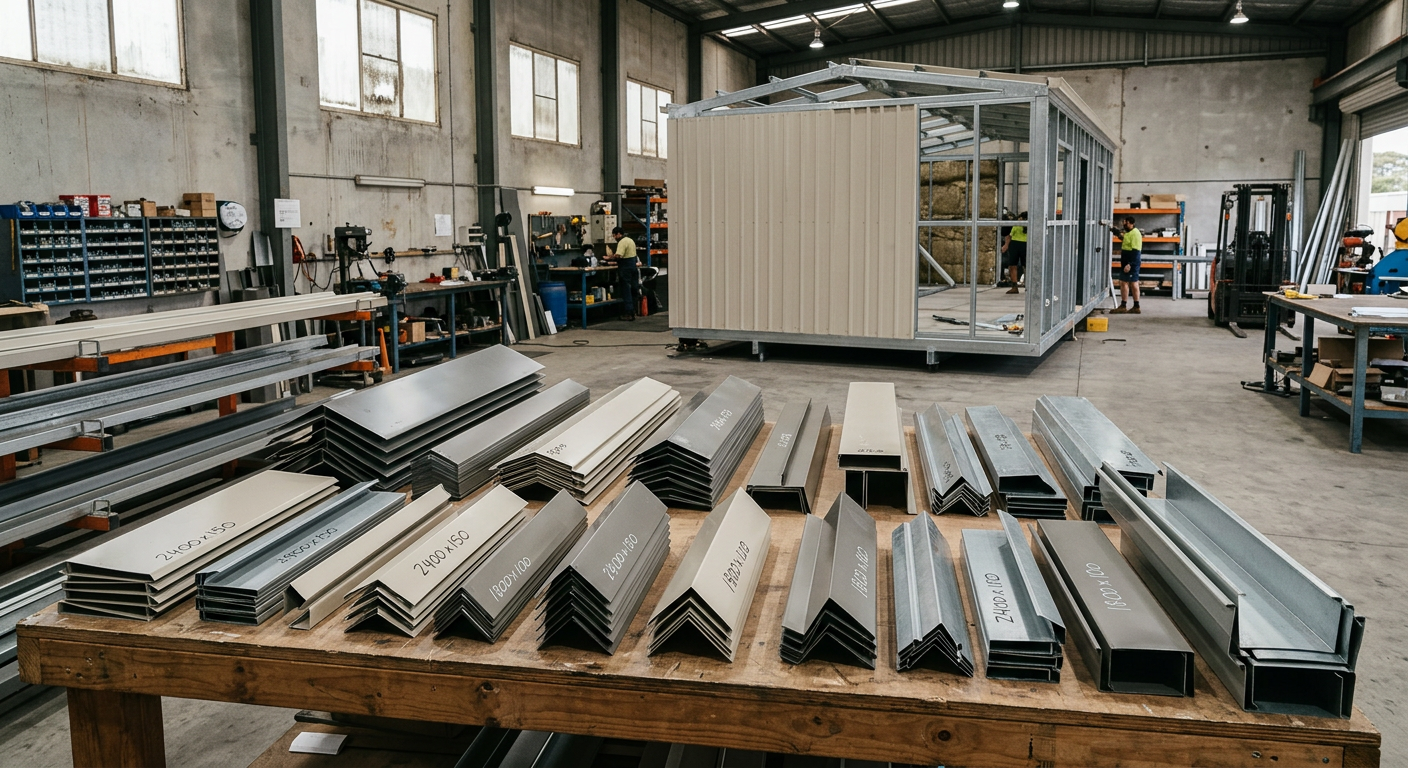
Choosing metal pressings for a portable building project starts with a fabrication-ready order, not a generic product name. The order should identify each pressing, show its profile and dimensions, state the specified material and quantity, and carry the drawing or project reference that controls it.
Portable and modular projects often repeat units, openings and junctions, but similar components can still differ. A clear order separates what is common across the building set from what belongs to one unit, elevation or detail.
That distinction matters for flashing, pressing, cladding, sheeting, tophat and batten orders. It gives the fabricator usable information while keeping design choices and onsite decisions with the builder or contractor responsible for the project.
Wesroof fabricates and delivers custom metal components for transportable buildings. We can turn supplied dimensions, profiles and material selections into an organised fabrication order, while installation remains outside our service.
Begin With The Project’s Own Name For The Item
A portable project can accumulate quick descriptions such as top trim, corner fold or door pressing. Those labels may help during a conversation, but they can become ambiguous when several units use related shapes. Begin with the wording shown on the current drawing, schedule or project brief, then add a unique item code that can follow the component through quoting, fabrication and delivery.
Add the building, unit and location reference beside that code. “Unit P-07, entry opening, detail B-12” tells us far more than “front flashing”. If the same profile repeats, record the repeated locations rather than assuming every apparently similar opening uses the same length or fold.
Where the project has no formal label, create a simple working identifier and mark the source of the information. A sketch number, dated PDF or builder’s written instruction gives each dimension a traceable origin. When revised information arrives, the order can show which item changed without forcing every component back through an avoidable identification exercise.
Turn The Request Into A Decision Brief
A useful decision brief is compact enough to review but detailed enough to quote and fabricate from once all essential fields are settled. Start with the project name, delivery destination, contact responsible for the order and the latest drawing revision. Then list the item code, component type, quantity, material, finish wording, profile dimensions and specified length.
Separate confirmed order data from open decisions. If a drawing shows a fold but omits a return dimension, flag that field for the builder or contractor. If the specification names Colorbond but the selected colour is still being confirmed, retain the material wording and keep the colour as an open field. This prevents an assumption from becoming part of the fabrication instruction.
The brief should also show whether a dimension is finished size, internal size or an overall envelope. A small diagram with fold directions and labelled faces is often clearer than a string of numbers. Include the units of measurement once and use them consistently throughout the item schedule.
For modular building pressings, our custom pressings include flashings, gutters, downpipes and specialised trims, with transportable building pressings listed as a product line. The useful starting point is the component schedule and the current drawings that define each ordered shape.
Keep Source Documents And Conversation Notes Apart
Portable building work may be discussed through drawings, marked-up PDFs, emails, photographs and meeting notes. Keep the source beside every change that affects the order. A photograph can clarify the location being discussed, while the controlling dimensions should come from the information authorised by the builder or contractor.
Our fabrication background goes back to 1970 in Western Australia. That experience does not remove the need for clear current instructions. An old order, familiar profile or previous unit can help identify a question, but the present project references should control the new order.
When two files conflict, pause the affected item and ask which revision applies. Do not average dimensions, copy a fold from the clearer drawing or treat a verbal comment as an automatic drawing revision. Record the answer against the item code so the updated instruction is visible when the order is reviewed.
The same discipline applies to delivery details. Group items by building or stage where that helps the receiving contractor, and make sure the labels on the order use the same references as the delivery sequence. We fabricate and deliver; the receiving party should be able to identify each bundle without relying on a private nickname used earlier in the project.
Record Material Wording Exactly As Supplied
Metal pressings can be made from different material families, and the drawing or specification should state which one applies. Record Colorbond, Zincalume, galvanised steel, aluminium, stainless steel or mild steel exactly as supplied. Keep a finish or colour reference in its own field so it cannot be confused with a material description.
Choose the material through the project’s design and specification process before issuing the final order. Our aluminium pressings give the order a clear destination when aluminium is specified. Keep the relevant profile, quantity and finish wording together on the aluminium schedule.
Use a separate line for stainless pressings when the project calls for stainless steel. Separate schedules reduce the chance of mixed material instructions being read as interchangeable.
A broader steel materials order may include sheeting, tophat, batten and related pressed components. Use the trade noun shown in the project documents, then add the profile or section drawing needed to distinguish it from another item with a similar informal name.
As a family-owned WA fabricator, Wesroof supplies construction and industry from Maddington. We work from the order information provided, so material, profile, quantity and delivery references need to be settled before the relevant component moves into fabrication.
Keep Profile And Length Separate
A profile describes the cross-sectional shape of a pressing. Length describes how far that shape runs. Record both independently, even where every item on the first issue happens to share one length. Portable units may be revised, mirrored or grouped differently, and a dedicated length field makes those changes easier to identify.
Show each fold in sequence from a nominated edge. Label angles and dimensions clearly, and indicate which face or visible side matters where the supplied drawing does so. Avoid relying on a sketch that can be read from either direction. A simple datum and consistent orientation can prevent two people from interpreting the same shape differently.
Keep Quantity Tied To A Location
A total quantity is useful for pricing, but a location schedule is useful for checking. Record how the total divides across units, elevations or openings. If one unit needs a different length, give it a separate line rather than hiding the variation in a note beneath the total.
This also helps the builder or contractor review substitutions and revisions. If five items remain unchanged and one has a new profile, the updated schedule can isolate that line. The fabrication request stays concise without losing the relationship between the metal component and its destination in the portable building set.
Use Cladding 280 Only For That Profile
Where the project specifically selects the named profile, schedule Cladding 280 as Cladding 280 and keep its sheet lengths, quantities and colour references attached to that line. Do not use 280 as a generic label for other cladding or sheeting profiles.
Cladding sheets and folded edge pressings should have separate item codes even when they share a colour. The sheet order describes the selected profile and length, while corner, head, sill or junction flashings each need their own shapes. This keeps the cladding schedule readable and gives every fabricated part a clear reference.
Translate The Detail Into A Fabrication Order
Once the decision brief is complete, convert it into an item schedule rather than sending a collection of disconnected mark-ups. Use one row per unique combination of profile, material, finish, length and location. Attach the relevant detail to that row and give every attachment a revision or date.
A flashing order should show the fold sequence and each face dimension. A pressing for a door or window opening should also state which opening and unit it belongs to. A sheeting order should identify the selected profile, length, quantity and project colour wording. A tophat or batten order should use the section name and dimensions supplied by the project documents.
Our light fabrication capability covers cutting, bending, forming and assembly of suitable components. If the order involves an assembly rather than a single folded pressing, make that distinction at the start and provide the drawings that show how the pieces relate.
Package the order so the quote and later instruction refer to the same item codes. If the scope changes, revise the schedule and identify the changed rows. A message saying “make these longer” is difficult to control; a revision that names item MP-14 and replaces its recorded length gives the contractor and fabricator a common reference.
Use Questions That Have A Clear Owner
Open questions should go to the person who controls the answer. Material and colour selections belong with the project’s design or specification process. Unit quantities and delivery stages belong with the builder or contractor managing the order. Fabrication questions about a supplied profile can come to us with the relevant drawing attached.
Our supply FAQ states that we fabricate and deliver and can refer trades for installation. Installation planning and onsite coordination remain with the builder, contractor or referred trade rather than being folded into the metal supply order.
Ask one decision at a time where possible. “Please confirm the current colour reference for items MP-04 to MP-09” is easier to resolve than “Please confirm all finishes”. Name the drawing revision and affected item codes so the answer can be placed back into the order without interpretation.
When an answer changes a profile, material, quantity or length, issue an updated schedule rather than leaving the change in an email chain. This gives the fabricator one current instruction set and gives the contractor a cleaner record for checking the delivered components against the order.
Review The Brief Before Sending It On
Read the schedule as someone who has not followed the earlier project conversations. They should be able to identify every pressing, find its source drawing, understand its material wording, see the quantity and locate the delivery grouping. Any unexplained nickname or unattached dimension needs another pass.
Check that the latest issue of every relevant drawing is included. Confirm that item codes in the schedule match the labels on sketches and mark-ups. Review the totals against the location breakdown, and make sure repeated profiles have not absorbed a different length, finish or fold hidden elsewhere in the documents.
Then ask the builder or contractor who holds the flashing, pressing or sheet order to confirm the final schedule. That person can resolve project selections and onsite coordination before the instruction reaches fabrication. We can then discuss the supplied profile information, material categories, quantities and delivery grouping within our fabricate-and-deliver scope.
Make The Next Question Easier To Trace
For transportable buildings, the strongest enquiry is a controlled component order. Give every flashing, pressing, cladding sheet, tophat and batten a unique reference, connect it to the current drawing, and separate confirmed dimensions from decisions that still sit with the project team.
Ask the builder or contractor who has the order to settle its profile, material, finish, quantity and delivery references, then Speak with us about fabrication and delivery.

Leave A Comment