
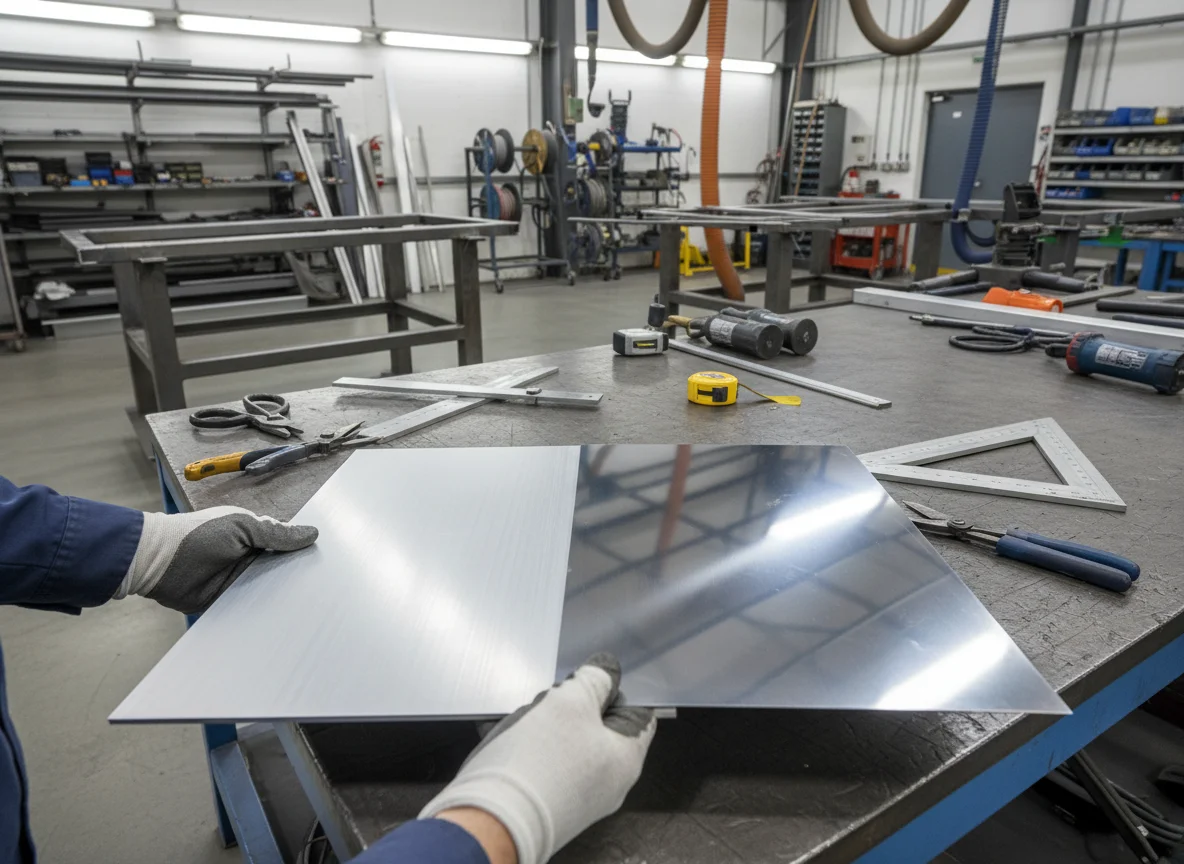
Aluminium and stainless steel can both be pressed into accurate folded parts, but they do not ask the same questions. Aluminium usually brings the conversation towards weight, architectural appearance, finish preparation and how the component reads beside windows, facades or roof sheets. Stainless steel usually brings the conversation towards grade notes, surface condition, hygiene, corrosion resistance, high strength and demanding industrial or architectural use.
That contrast should be visible before the drawing reaches the press brake. A pressed aluminium sheet enquiry should not look like a pressed stainless steel sheet enquiry with the metal name swapped. The same fold line can carry different finish notes, visible-face decisions, certification questions and service expectations because the selected material is doing a different job.
Aluminium Starts with Visible Lightness
When aluminium has already been selected by the project documents, the brief should explain where the part sits and why its visible behaviour matters. Light fabrication may apply if several prepared parts become one supplied item. A window pressing, facade trim, sub-frame cover, cill, specialised junction cover or pressed roof sheet can all need aluminium for different reasons. The part name and location should be written before the buyer lists quantities.
Wesroof’s aluminium pressings page refers to lightweight, durable aluminium solutions for modern architecture. It names aluminium’s favourable strength-to-weight ratio and natural resistance to weathering in high-exposure applications, and it lists window and door system components, facade pressings and pressed roof sheets. Those statements support aluminium as a common material for architectural and commercial construction pressings, while leaving grade, suitability and finished-system decisions with the project specification.
Name the Seen Face
The aluminium line in the schedule should therefore carry visual information. Custom metal flashings and construction pressings may sit in the same pack when folded pieces are listed. Which face is seen? Is the part being prepared for natural mill finish, anodising preparation or powder coating readiness as nominated by the documents? Does the return face a window suite, facade panel, roof sheet or feature line? If the answer is not on the drawing, the enquiry should mark the gap instead of asking the fabricator to infer it.
The brief can also say how the aluminium part sits in a set. A run of window trims may need handed pieces, repeated lengths and consistent visible faces. A facade pressing may need to follow a panel line or sit beside a cladding profile. Those notes are not extra design work for the supplier; they are the buyer’s way of showing how the nominated part should be read.
Stainless Starts with Surface Duty
Stainless has a different centre of gravity. It may be chosen for a hygienic component, a demanding industrial part, a gutter or downpipe, a wear slide, a liner, a transfer component or an architectural item where the surface itself is important. The shape still matters, but the material note often carries more information about grade, finish quality and use context.
Wesroof’s stainless steel pressings page describes pressings and components in various grades of stainless steel. Name the grade from the project documents. Do not invent a food-handling or hygiene claim.
For a pressed stainless steel sheet request, the schedule should not stop at the word stainless. It should state the required grade if the project has named one, identify the required surface or finish quality, and say whether certification is required by the specification. A hygienic pressing, an industrial wear slide and a premium architectural cover are not the same order just because they share a metal family.
Name the Working Face
The stainless note should also identify which surface matters most. A liner, slide or transfer component may have a working face that is more important than the hidden return. A stainless gutter or downpipe may need the schedule to connect the part to the nominated environment and drawing. A decorative item may need the visible surface protected in the brief. Each example changes the information beside the fold. Wesroof keeps that with the fabrication enquiry.
Read the Same Fold Through Two Materials
A direct comparison helps the buyer find missing information. Steel roofing and building materials may sit in the same pack when sheets are listed. If the component is aluminium, ask whether the visible side, finish preparation, alignment with neighbouring facade parts and repeated lengths are all clear. If the component is stainless, ask whether grade, surface expectation, functional face, certification requirement and service context are all clear. The drawing can be identical in outline while the useful notes beside it are different.
The aluminium path often needs careful language around appearance. Metal cladding can sit beside a related wall face. Does a folded trim continue a window line? Does a facade piece need consistent seen faces across a run? Does a roof sheet or cladding piece need to relate visually to another material? These are supply inputs only when the project documents have made the choices. They should be attached to the live drawing rather than added as vague comments.
The stainless path often needs the functional surface to be named. Does the pressing have a working face, a drain face or a liner face? Show returns, edges and contact areas on the drawing.
A second reading can look at what would go wrong if the two paths were blurred. An aluminium facade part with no visible-face note may be hard to align with neighbouring pieces. A stainless component with no surface or grade note may be impossible to discuss against the specification. The side-by-side check is useful because it shows what each material needs before price, fabrication or delivery is discussed.
Finish and Certification Sit in Different Places
Finish language can easily blur the two materials. The FAQ covers how we take an enquiry and what we do not install. Aluminium sources mention natural mill finish, anodising preparation and powder coating readiness. Stainless sources mention finish quality and material certification where required. These are not interchangeable notes. They belong in different columns of the request because they answer different questions.
For aluminium, the finish note often explains the intended appearance or preparation before a later process nominated by the project. Light fabrication may apply if several prepared parts become one supplied item. For stainless, the surface note may explain functional expectations or documentation required by the specification. Neither note should become a promise that a finish is available, suitable or compliant for every situation. The buyer should record what has already been selected and ask what information is needed to discuss fabrication.
The schedule can also separate fixed requirements from preferences. A fixed requirement may be a nominated stainless grade, a finish quality set by a project document, or a preparation note attached to an aluminium pressing. A preference may be an appearance target that still needs confirmation. Labelling the difference keeps the fabrication conversation from becoming a design decision.
Mixed Material Schedules Need Separate Lines
Many projects do not contain one metal only. About Us covers the fabrication and supply scope. Aluminium pressings may sit beside stainless items, coated steel roof sheets, cladding trims, gutters or other fabricated parts. Wesroof’s broader service mix crosses aluminium, stainless, roofing, cladding and custom construction pressings, so the schedule has to keep each material decision attached to the correct component.
Separate Lines for Mixed Metals
A mixed schedule should use separate lines for aluminium and stainless parts, even when they share a drawing set. Each line should name the component, drawing revision, material note, finish or grade requirement, visible or functional face, quantity and relationship to adjacent items. If two materials meet on the same elevation or assembly, the responsible project team should resolve compatibility and suitability questions before treating the order as ready.
Revision control matters here. If the material changed after the drawing was issued, send the revised sheet and remove the superseded note from the request. If the finish is in the specification but not on the drawing, point to both documents and say which one governs. Material behaviour only helps fabrication when it is tied to the current document set.
Wesroof Supplies the Nominated Pressing
The live homepage describes custom steel and sheeting solutions for construction and industry in Western Australia. That is fabrication and supply, not installation.
Wesroof can discuss fabrication and supply when the project team provides the chosen material, drawing, finish or grade note, quantity and handover information. It should not be asked to choose the material system, assess the building environment, engineer the component, approve compliance or take responsibility for installation by others. The supplier lane is strongest when the material choice is already documented.
This does not make the enquiry narrow in a bad way. It makes it readable. Aluminium parts can carry appearance and preparation notes. Stainless parts can carry grade, surface and certification notes. Both can sit in the same project packet without being blurred into one generic metal request.
Compare before Asking for a Price
Before contacting a supplier, place the aluminium and stainless paths side by side on the schedule. For aluminium, check the part name, visible face, finish preparation, drawing revision, relationship to facade, window or roof components, and quantities. For stainless, check the part name, grade note, surface expectation, functional face, certification requirement if specified, service context and quantities.
For a fabrication and supply conversation, Contact us to send the drawing set, separated material lines, finish notes and quantities.

Leave A Comment